

Topps Now is defined as a print-on-demand MLB collectible card product that captures specific baseball moments in real time, with each card’s print run determined entirely by how many orders are placed during a limited sales window. Unlike traditional card sets with fixed, pre-planned production runs, Topps Now cards exist because a moment happened. A no-hitter, a record-breaking home run, a milestone strikeout — each event triggers a new release. The result is a product where scarcity is transparent, timing is everything, and the connection between the card and the moment is direct. This mlb topps now card explained guide covers everything from production mechanics to parallel rarity tiers to smart buying strategy.
How does the topps now print-on-demand model work?
Topps Now cards are produced using a strict print-on-demand system, meaning the total number of cards printed equals the total number of orders placed. No overproduction. No warehouse surplus. The final print run is announced only after the sales window closes, giving collectors confirmed scarcity data rather than estimated odds.
The release process follows a consistent pattern:
- A notable MLB moment occurs. A player hits his 500th career home run, throws a perfect game, or sets a franchise record.
- Topps releases a card within 24–48 hours. The 24-hour sales window opens immediately following the event.
- Collectors place orders during the window. Base cards, parallels, and team sets are all available simultaneously.
- The window closes and the print run is locked. Topps announces the final count publicly, and cards ship weeks later.
- Secondary market activity begins. Dealers and collectors list cards on platforms like eBay once print runs are confirmed.
Sales are conducted primarily through Fanatics, which now operates the Topps brand. Cards are sold individually or in team set formats, and nearly 1,000 cards are released in a typical MLB season. That volume reflects how frequently the product captures moments across all 30 teams.
Short print and super short print variations also occur for select releases. These are not announced in advance, which adds an element of surprise for collectors who open orders expecting a standard base card.

Pro Tip: Order during the first few hours of a sales window. High-profile moments attract surges of late orders that inflate print runs, reducing the relative scarcity of your card.
What types of topps now cards exist?
Topps Now releases fall into several distinct categories. Understanding each type is the foundation of smart collecting.
Base Cards are the standard version of every release. They feature a foil finish and carry an open-ended print run tied directly to order volume. A card for a routine milestone might print at 300 copies. A card for a historic event could print at 5,000 or more.
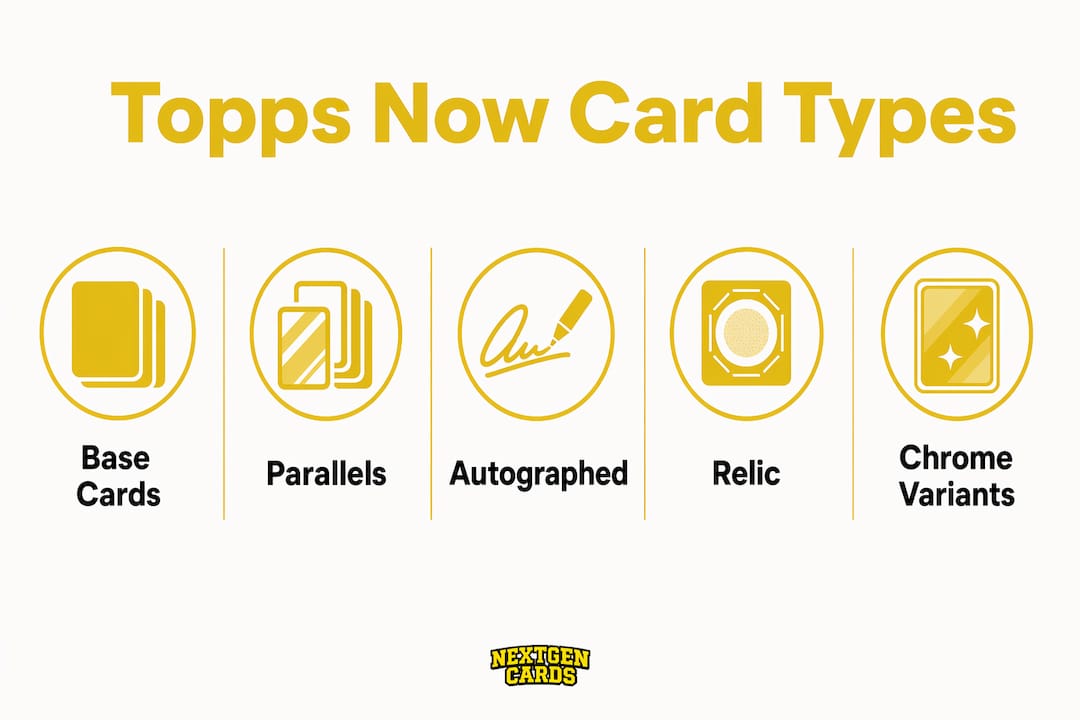
Parallels are serial-numbered variants of the base card, printed at fixed quantities regardless of total order volume. The parallel ladder for most Topps Now releases includes:
| Parallel Type | Serial Numbering | Rarity Level |
|---|---|---|
| Gold Foil | /50 | Scarce |
| Orange Foil | /25 | Very Scarce |
| Black Foil | /10 | Rare |
| Red Foil | /5 | Very Rare |
| FoilFractor | 1/1 | One of One |
Higher production base cards unlock additional parallel tiers, including Chrome and Opal Chrome variants with their own serial number structures. The FoilFractor is the crown jewel of any Topps Now release. It is a true one-of-one card, making it the rarest version of any given moment card.
Autographed Cards are randomly inserted into select orders for milestone releases. They are not guaranteed with any purchase. Autograph and relic distribution varies by card and event significance, meaning a record-setting performance is more likely to carry autograph inserts than a standard weekly highlight.
Relic Cards feature swatches of game-used memorabilia, typically jersey material or bat fragments. These are among the rarest Topps Now inserts and carry significant collector value when paired with a star player.
Pro Tip: Check the Beckett checklist for each Topps Now release before ordering. It confirms which cards in a given series carry autograph or relic inserts, so you can prioritize your purchases.
How do topps now cards compare to traditional MLB cards?
Traditional MLB card sets like Topps Series 1, Series 2, and Topps Chrome operate on a fundamentally different model. Print runs are set before production begins, odds for hits are listed on packaging, and the connection between a card and a specific moment is loose at best. A player’s base card in Topps Series 1 reflects his general status in the game, not a specific achievement.
Topps Now inverts that model entirely. Print run transparency allows collectors to assess scarcity with precision, removing the speculation that drives much of traditional card investing. When you know a card printed at 412 copies, you can make a rational judgment about its long-term value. Traditional products rarely offer that clarity.
“Topps Now represents a paradigm shift by monetizing real-time baseball moments transparently, offering collectors clear print run data to inform investment and collecting strategy.” — Topps Now: New Junk Wax or Smartest Product?
The debate in the collector community centers on whether this transparency is a feature or a warning sign. Some collectors argue that Topps Now is the new junk wax era, a reference to the overproduction crisis of the late 1980s and early 1990s that destroyed the value of millions of cards. Others see it as the smartest product in modern collecting because demand is self-regulating. If nobody orders, the print run stays low. If everyone orders, the print run reflects genuine market interest.
The psychology of scarcity also works differently here. With traditional packs, collectors chase hits without knowing the odds. With Topps Now, the scarcity is confirmed after the fact. That confirmation either validates the purchase or reveals that a card is more common than expected. Both outcomes shape the secondary market in ways traditional products cannot replicate.
How to buy topps now cards and assess their value
Buying Topps Now cards requires speed and strategy. The primary window is the official Fanatics platform, where cards are listed immediately after a qualifying MLB moment. Once the window closes, the only option is the secondary market.
Key factors that determine Topps Now card value:
- Print run size. A card with a 200-copy print run is objectively scarcer than one with 3,000 copies. Lower print runs command higher secondary market prices.
- Player significance. Cards featuring Shohei Ohtani, Aaron Judge, or other elite players attract more collector interest regardless of the moment captured.
- Moment importance. Historic milestones like career home run records or no-hitters generate higher demand and often higher print runs, but the moment’s permanence sustains long-term value.
- Parallel tier. A Red Foil /5 of a significant moment for a star player is among the most desirable Topps Now cards on the market.
- Autograph or relic inclusion. Randomly inserted autographs and relics dramatically increase a card’s value over the base version.
For secondary market purchases, eBay is the primary platform. Dealers regularly list Topps Now base cards after sales close, often at a markup over the original retail price. Timing your purchase matters. Prices typically spike immediately after a print run is announced, then stabilize or drop as the initial excitement fades.
To spot undervalued Topps Now cards, focus on moments for players who are trending upward but have not yet reached peak market recognition. A prospect’s first career home run card with a low print run can appreciate significantly if that player develops into a star.
Pro Tip: Buying base cards in bulk from Fanatics increases your odds of receiving randomly inserted parallels, autographs, or relics. Experienced dealers use this strategy to build secondary market inventory.
Key takeaways
Topps Now cards derive their value from print-run transparency, moment significance, and parallel rarity, making informed buying strategy the single most important factor in building a strong collection.
| Point | Details |
|---|---|
| Print-on-demand model | Print runs match exact order volume, confirmed publicly after each sales window closes. |
| Parallel rarity tiers | Gold (/50) through FoilFractor (1/1) offer serial-numbered scarcity above the base card. |
| Autographs and relics | These inserts are randomly distributed in select releases and are never guaranteed per purchase. |
| Secondary market timing | Prices spike at print run announcement and often stabilize within days, creating buying opportunities. |
| Moment and player matter | Historic milestones for elite players produce the highest long-term collector demand. |
Why topps now has changed how i think about collecting
The first time I tracked a Topps Now print run announcement, I realized the hobby had shifted in a way most collectors had not fully processed yet. Traditional card collecting rewards patience and luck. You buy packs, you hope for hits, and you accept that the odds are stacked against you. Topps Now rewards research and timing instead.
What I find genuinely compelling about this product is that the transparency forces collectors to be honest with themselves. You cannot rationalize a 5,000-copy base card as rare. The number is right there. That clarity cuts through the speculation that inflates prices in other segments of the hobby.
The saturation risk is real, though. When Topps Now releases nearly 1,000 cards in a single season, collector fatigue sets in. Not every moment deserves a card, and not every card deserves your money. The collectors who thrive with this product are the ones who are selective. They target specific players, specific milestones, and specific parallel tiers rather than chasing every release.
My honest recommendation is to treat Topps Now as a curated collection rather than a completionist pursuit. Pick the moments that matter to you, prioritize low print runs and high-tier parallels, and use confirmed print run data to make rational decisions about value. The hobby is more enjoyable when you are buying with purpose rather than impulse.
— Richard
Find rare topps rookie autographs and relics at Nextgencards
Collectors who understand Topps Now know that the real value sits in authenticated autographs, relics, and scarce parallels tied to significant moments. Nextgencards curates exactly that kind of inventory, with a focus on rare rookie autographs and relics from players like Shohei Ohtani, Aaron Judge, and top prospects entering the league.
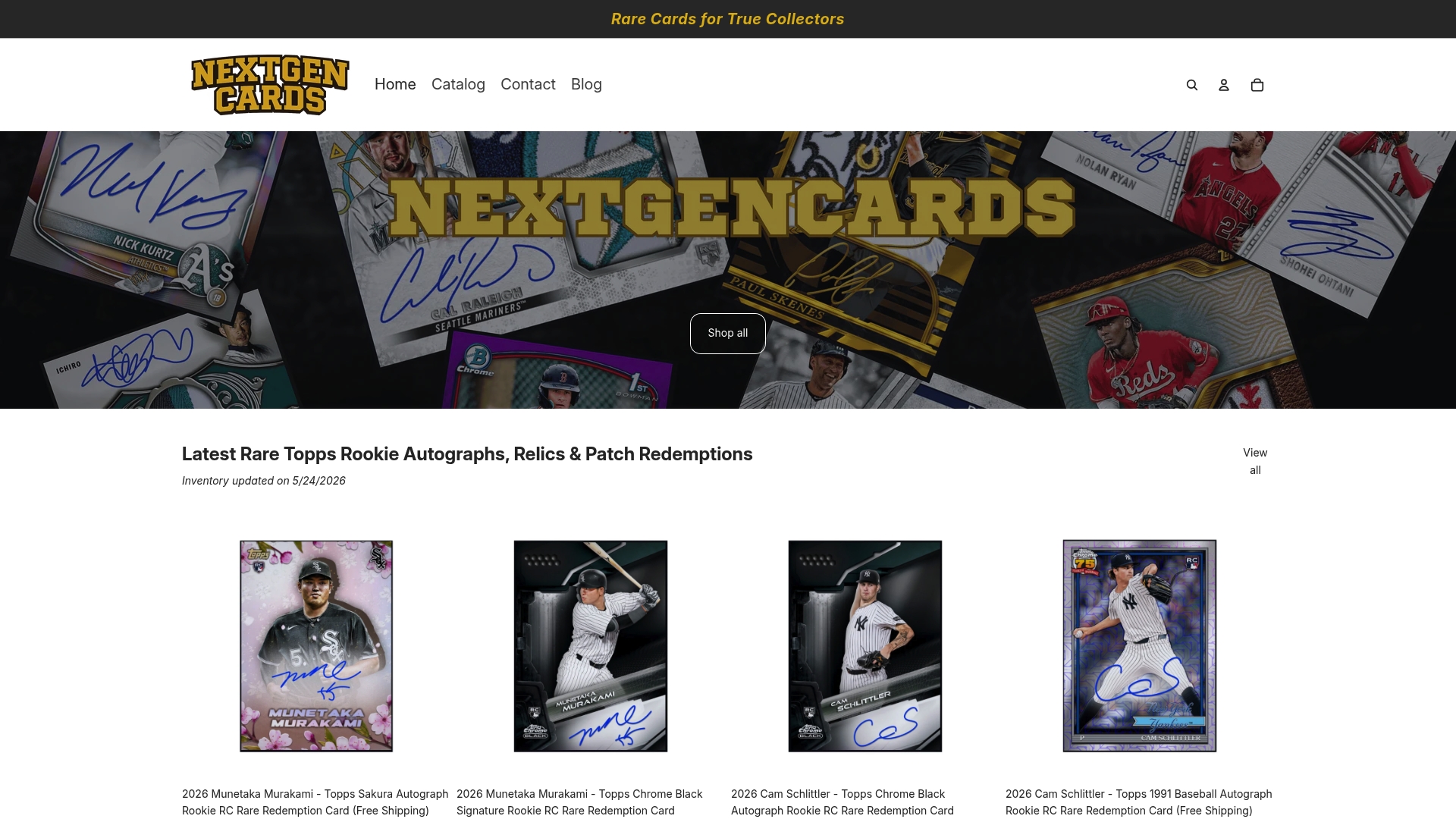
Every card in the Nextgencards collection is authenticated and sourced for serious collectors. Free shipping is available on select items, and the inventory is updated regularly to reflect the most current and collectible releases. If you are ready to move from researching Topps Now to actually owning premium cards, Nextgencards is the place to start.
FAQ
What is a topps now card?
A Topps Now card is a print-on-demand MLB collectible card released within 24–48 hours of a notable baseball moment, with the total print run matching the exact number of orders placed during the sales window.
How long is the topps now sales window?
The standard Topps Now sales window is 24 hours following a qualifying MLB event. Some special releases extend slightly longer, but most close within that window.
Are topps now cards worth buying?
Topps Now cards are worth buying when the print run is low, the player is significant, and the moment is historically relevant. Base cards with high print runs carry limited long-term value compared to serial-numbered parallels or autograph inserts.
Where can i buy topps now cards after the window closes?
After the sales window closes, Topps Now cards are available on eBay and through specialty dealers. Prices typically reflect the confirmed print run, with lower-run cards commanding higher premiums on the secondary market.
What is the rarest type of topps now card?
The FoilFractor parallel is the rarest Topps Now card type, produced as a true one-of-one for select releases. Autographed relics for milestone moments are also among the most scarce and valuable cards in the product line.
0 comments