

An MLB All-Star card insert is a non-base card produced specifically to highlight players selected for the All-Star Game, featuring unique designs, limited print runs, and thematic elements tied to the event or player milestones. The industry term for this category is “insert card,” meaning any card intentionally placed within a product at a lower frequency than base cards. Understanding the MLB All-Star card insert explained in full requires knowing three things: how these cards are made, what drives their value, and how to time your moves in the market. Topps has produced All-Star inserts since the 1980s, and the category now spans holographic parallels, autograph relics, and serial-numbered short prints that serious collectors actively target.
What defines an MLB All-Star card insert?
All-Star card inserts serve primarily as commemorative and milestone cards that highlight player achievements and event participation. That function separates them from base cards, which simply document a player’s season, and from parallels, which replicate base card designs in alternate colors or finishes. An insert carries its own unique design, its own theme, and typically a much lower print run than either of those categories.
The defining characteristics of a modern All-Star insert include:
- Holographic or high-gloss finishes that visually distinguish the card from standard stock
- Serial numbering printed directly on the card face, indicating exactly how many copies exist
- Thematic photography tied to the All-Star Game, Home Run Derby, or a specific milestone
- Autograph or relic windows embedded in premium versions, containing a player signature or jersey swatch
- Retailer exclusives sold only through specific channels such as hobby shops, big-box retailers, or online platforms
2026 All-Star inserts widely feature holographic technology, serial-numbered parallels, and high-gloss finishes, with product drops timed around the july All-Star Game in Philadelphia. That timing is deliberate. Card manufacturers release product close to the event to maximize collector excitement and retail traffic.
Mega Boxes and standard hobby boxes distribute inserts differently. Mega Boxes show pull rates of 1:3 packs for All-Star base parallels, while standard hobby boxes guarantee approximately 3 autograph or memorabilia hits across 12 packs. That difference matters when you are deciding where to spend your box budget. Hobby boxes deliver guaranteed hits; Mega Boxes give you better odds on parallels but fewer premium cards overall.

How does the All-Star event drive card insert demand?
Player selection announcements create the first wave of price movement. Starters and large-market players see bigger price gains than reserves or small-market selections. A first-time All-Star from a major market like New York or Los Angeles will spike harder than a veteran reserve from a smaller city, even if the reserve has stronger career numbers.
The market moves in predictable stages:
- Pre-announcement speculation: Collectors buy cards of likely All-Star candidates weeks before rosters are official, betting on selection.
- Roster announcement: Confirmed selections see immediate price jumps, with starters gaining more than reserves.
- All-Star Week: Home Run Derby wins and All-Star Game MVP awards trigger secondary price spikes on top of the roster bump.
- Post-event stabilization: Prices typically settle after the event to a new baseline that is higher than pre-selection levels for rookies and first-timers.
Late additions to the roster represent a specific buying opportunity. Savvy collectors monitor injury reports and replacement rumors weeks ahead of official announcements to capitalize on pre-selection price movement. A player added as an injury replacement still receives the full All-Star designation, which means their insert cards carry the same commemorative status as a starter’s.
Selling during the event maximizes value peaks. Awards such as All-Star Game MVP or Home Run Derby wins spark additional spikes that can move a card’s value significantly within hours. Collectors who hold through the event without a clear exit plan often miss the peak window.
Pro Tip: Set a target sell price before the All-Star Game begins. Emotion during live events leads to holding too long and missing the spike.
What rarities and variations should collectors know?
Rarity is the single biggest driver of insert card value. The table below summarizes the main rarity categories collectors encounter in the All-Star insert market.
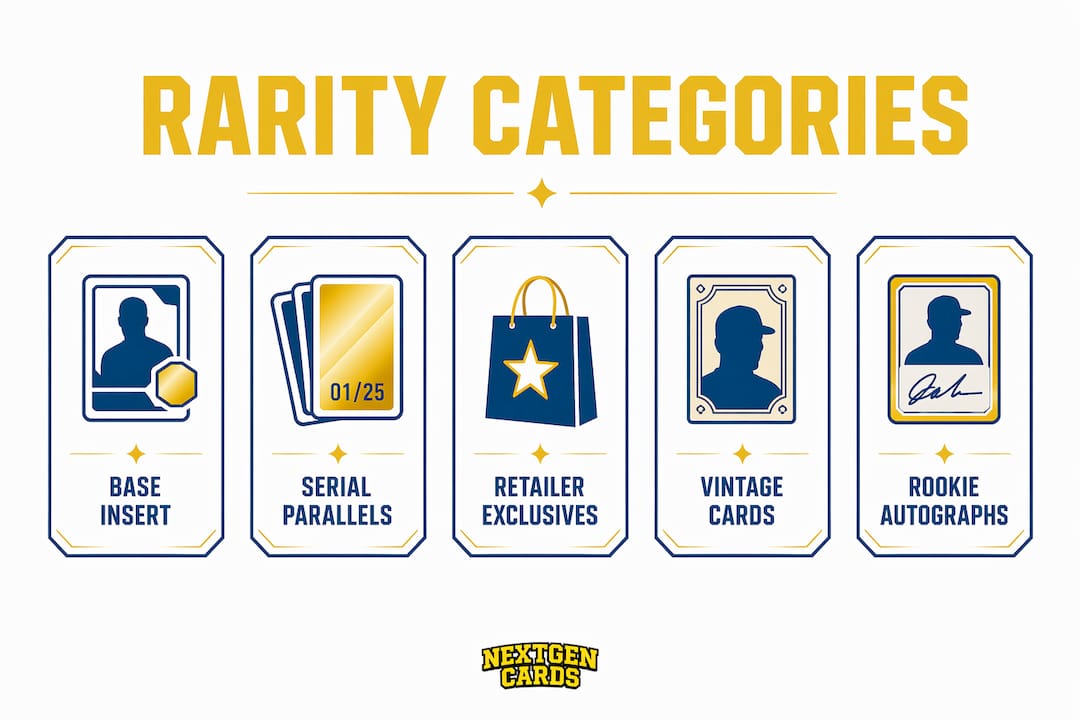
| Rarity category | Typical print run | Key feature |
|---|---|---|
| Base insert | 500+ copies | Unique design, no serial number |
| Serial-numbered parallel | 25–250 copies | Number stamped on card face |
| Short print | Not publicly listed | Unannounced, discovered by collectors |
| Printing plate | 1 copy (4 colors) | Actual press plate used in production |
| Autograph relic | 10–99 copies | Signature plus embedded memorabilia |
Serial-numbered parallels, holographic finishes, and retailer exclusives often command significant premiums. Unannounced short print versions can be 300% more valuable than standard parallels. That gap exists because collectors cannot predict short print ratios in advance, making discovery the primary driver of excitement and price.
Vintage All-Star inserts tell a different story. Topps Glossy All-Star cards from 1984 to 1991 carry nostalgic appeal, but some cards hold less value due to player relevance. Sets from that era also sometimes include manager or captain cards that lack star appeal, which dilutes the perceived value of the full set. Not every card in a branded All-Star insert set features a marquee player.
The junk-wax era presents the starkest contrast. 1988 Donruss Major League All-Stars cards frequently trade for $3–$8 due to heavy overproduction. That era produced millions of cards with no scarcity, which means nostalgia is the only real value driver. Modern serial-numbered inserts exist in a fundamentally different market.
Pro Tip: Always check the serial number on a card against the total print run before buying. A card numbered /250 and a card numbered /25 look similar in photos but differ dramatically in value.
Collectors targeting valuable sports card inserts should prioritize cards with confirmed low print runs over cards that simply look premium. Holographic finishes on a high-print-run card add visual appeal but not scarcity.
How should collectors approach buying and selling All-Star inserts?
The most effective All-Star collecting strategy is to buy on expectation, hold through the event, then reassess values after the All-Star Game concludes. That framework applies whether you collect for enjoyment, investment, or both.
Practical guidance for collectors:
- Buy before roster announcements. Cards of likely All-Star candidates cost less before official selection. The price premium arrives with the announcement.
- Monitor injury reports actively. Late additions still receive the All-Star designation. A replacement player’s cards can spike quickly with little prior market movement.
- Target premium hobby boxes at release. Collectors are advised to purchase premium hobby boxes early and wait 2–4 weeks post-event to evaluate singles pricing before buying individual cards on the secondary market.
- Evaluate singles post-event. After hype settles, undervalued inserts of strong performers often appear at fair prices.
- Avoid hype-driven purchases during All-Star Week. Secondary market prices often adjust after hype dissipates. True long-term value comes from player career milestones, not a single event performance.
Counterfeit inserts represent a real risk in the secondary market. Serial-numbered cards are frequent targets because their perceived scarcity makes them attractive to forgers. Always purchase graded copies from reputable grading services, or buy raw cards only from sellers with verified transaction histories.
Long-term holds work best for first-time All-Stars and rookies making their debut appearance. A player’s first All-Star insert card carries a milestone designation that does not repeat. Veterans selected multiple times produce more supply of All-Star inserts over time, which limits long-term price appreciation compared to a true first-timer.
Rookie autograph inserts tied to All-Star-caliber players represent the strongest intersection of scarcity and demand. A card like the 2026 Dylan Harper Topps Flagship Rookie Autograph combines the rookie designation with autograph scarcity, making it relevant to both insert collectors and autograph collectors simultaneously.
Key Takeaways
MLB All-Star card inserts derive their value from scarcity, player selection status, and event performance, making timing the most critical skill for collectors.
| Point | Details |
|---|---|
| Insert definition | All-Star inserts are non-base commemorative cards with unique designs and lower print runs than base cards. |
| Rarity drives value | Serial-numbered and short-print versions can be 300% more valuable than standard parallels. |
| Buy before announcements | Cards of likely All-Star candidates cost less before official roster selection. |
| Event timing matters | Selling during All-Star Week, especially after MVP or Derby wins, captures peak market value. |
| Vintage vs. modern | Junk-wax era inserts trade for $3–$8; modern serial-numbered inserts operate in a fundamentally different market. |
What the All-Star insert market actually rewards
Collectors often focus on the wrong variable. They chase the flashiest card in a set rather than the scarcest one. After watching the All-Star insert market across multiple seasons, the pattern is clear: the collectors who profit consistently are not the ones who buy the most exciting card. They are the ones who buy the most scarce card at the right moment.
The secondary catalyst effect is something most collectors miss entirely. A Home Run Derby win does not just celebrate a player. It creates a second price spike for cards that already moved on roster announcement. That double catalyst is the window where real gains happen. If you hold a serial-numbered insert of a Derby favorite and he wins, you have a narrow window of peak demand before the market corrects.
I have also seen collectors dismiss vintage All-Star sets too quickly. The Topps Glossy All-Star series from the 1980s will never be an investment vehicle, but those sets teach you something important: not every card in a branded insert set carries equal value. That lesson applies directly to modern sets. A 2026 All-Star insert of a fringe roster player is not the same asset as a first-time All-Star insert of a generational talent, even if both cards share the same set design.
The best mindset is to separate your collection into two buckets: cards you hold for personal enjoyment and cards you hold for value. All-Star inserts can serve both purposes, but conflating them leads to poor decisions. Buy the junk-wax era All-Stars because they are fun. Buy the serial-numbered modern inserts because they are scarce.
— Richard
Rare All-Star inserts worth adding to your collection
Nextgencards carries a curated selection of rare rookie autographs and relic cards directly relevant to All-Star-level talent. If you are building around players with All-Star upside, the 2026 Munetaka Murakami Topps Bowman Chrome Autograph Rookie RC combines Bowman Chrome’s premium finish with a scarce autograph print run on a player with significant market attention.
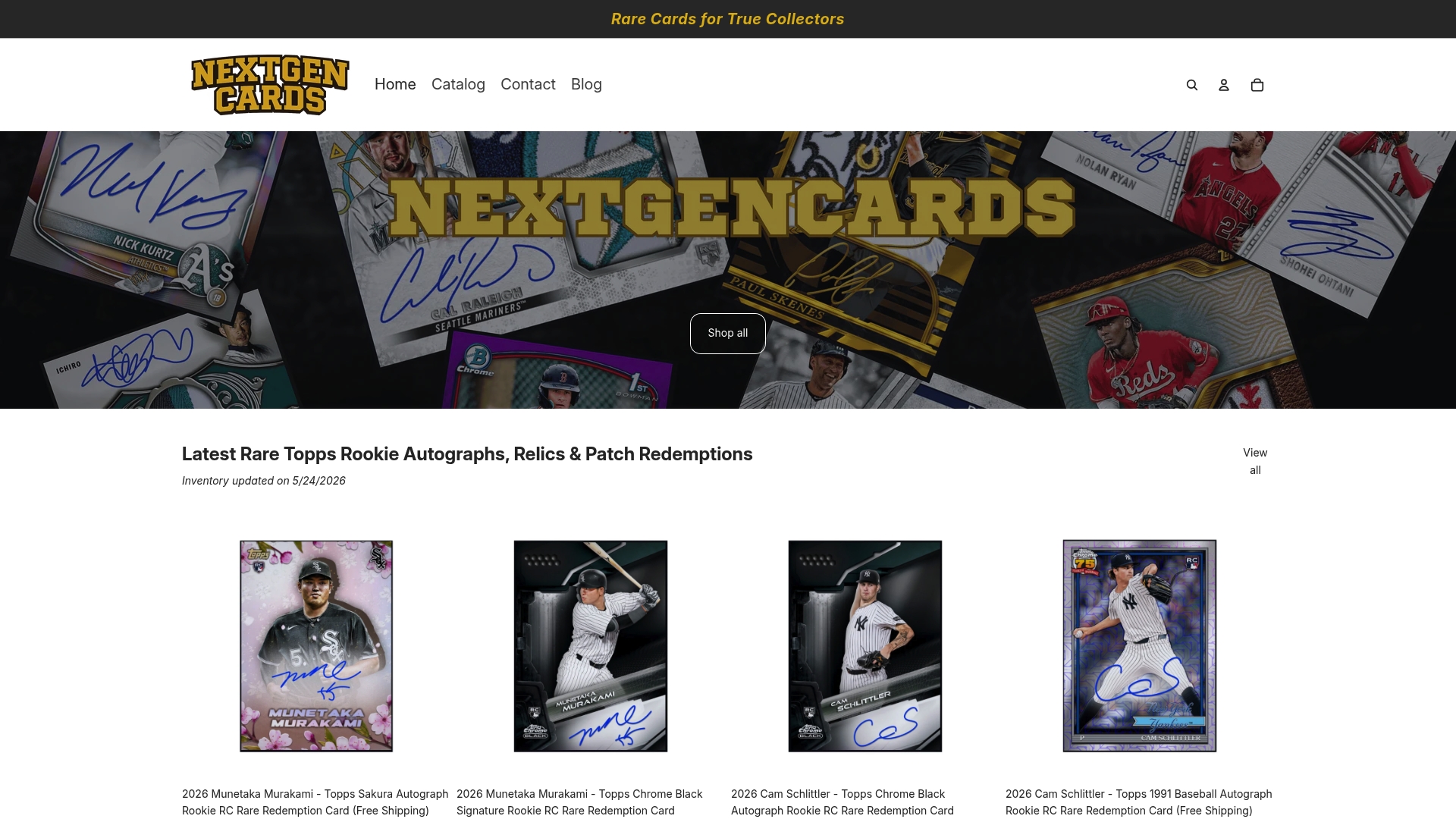
Nextgencards also stocks a broader range of rookie autographs and relic cards authenticated and ready to add to your collection. Free shipping is available on select items, and every card is sourced for authenticity. Collectors who want All-Star-caliber cards without the secondary market guesswork will find Nextgencards a reliable starting point.
FAQ
What is an MLB All-Star card insert?
An MLB All-Star card insert is a non-base card produced to commemorate player selection or performance in the All-Star Game, featuring unique designs, limited print runs, and thematic elements distinct from standard base cards.
How do All-Star inserts differ from parallels?
Parallels replicate a base card design in an alternate color or finish, while inserts carry their own unique design and theme. Inserts are produced at lower frequencies and are not simply color variations of existing cards.
When is the best time to buy All-Star insert cards?
The best time to buy is before official roster announcements, when prices reflect speculation rather than confirmed selection. Waiting until after the event typically means paying a premium that has already been priced in.
Are vintage All-Star inserts worth collecting?
Vintage All-Star inserts from the junk-wax era, such as the 1988 Donruss Major League All-Stars set, trade for $3–$8 and carry mostly nostalgic value. Topps Glossy All-Star cards from 1984 to 1991 have collector appeal but limited investment potential.
What makes a serial-numbered All-Star insert more valuable?
Serial numbering confirms exactly how many copies of a card exist, creating verifiable scarcity. Unannounced short prints can be 300% more valuable than standard parallels because their low supply is discovered rather than advertised.
0 comments