

A debut patch is a piece of jersey fabric worn by a player during their first official professional game, embedded directly into a rookie card to create a verified, one-of-a-kind collectible. The role of debut patch in rookie cards goes far beyond decoration. It transforms a standard relic card into a documented artifact tied to a specific, unrepeatable moment in sports history. Manufacturers like Topps and Fanatics authenticate these patches with tamper-proof holograms before card insertion, giving collectors a level of provenance that generic game-used patches simply cannot match. For serious collectors and investors, understanding this distinction is the foundation of smart acquisition.
What makes debut patches different from standard rookie card patches?
Debut patches originate from a single, verifiable event: the player’s first professional game. Standard game-used patches, by contrast, are sourced from jerseys worn across multiple games or practice sessions, then cut into dozens of pieces to fill card production runs. That process creates what the industry calls manufactured rarity. The patch exists in many cards, but the scarcity is artificial.
True debut patches work differently. According to the authentication process documented by Topps, patches are removed immediately after the debut game, applied adhesively to the jersey for easy removal, and authenticated before being embedded in cards. Each patch is then sealed with a tamper-proof hologram that links it to the player’s first appearance. That chain of custody is what separates a debut patch from every other relic card on the market.
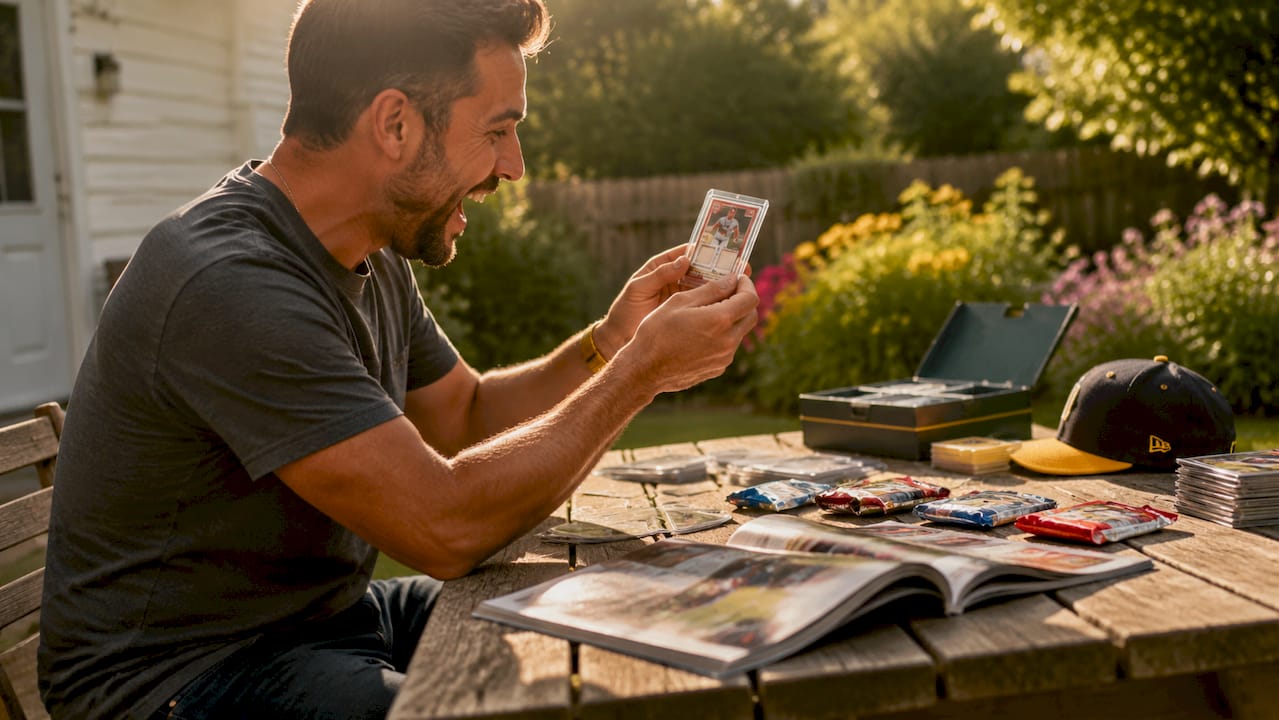
The provenance factor matters enormously to collector confidence. When you hold a debut patch card, you are holding a true 1-of-1 artifact linked to a verifiable historic event, not a fragment of a jersey that was cut into 200 identical pieces. That distinction drives both emotional value and market price.
Key features that define a legitimate debut patch card:
- Single-game origin: The patch comes from one specific game, not a pool of game-used jerseys.
- Immediate removal and authentication: Patches are removed the same day and logged with documentation.
- Tamper-proof hologram: Each patch carries a hologram that ties it to the player’s debut.
- Manufacturer documentation: Topps and similar producers maintain allocation records connecting the patch to the card.
- Limited print run: Because only one debut game exists per player, the total number of debut patch cards is structurally capped.
Pro Tip: When evaluating any patch card, ask for the provenance documentation. A legitimate debut patch card will have manufacturer records, a hologram, and game-use allocation notes. If the seller cannot produce these, treat the card as a standard relic.
How do debut patches influence rookie card value and market behavior?
Debut patches drive some of the highest prices in the modern trading card market. The clearest example is Paul Skenes, the Pittsburgh Pirates pitcher whose Rookie Debut Patch Autograph (RDPA) became the most expensive modern baseball card sold since 2022. A Skenes RDPA sold at auction for $1.11 million. Other sales from the same set reached $66,000 in december 2024 and $17,080 in march 2024. Those numbers reflect a market that rewards authenticated provenance at a premium.
The price range across a single player’s debut patch set also reveals how exclusivity tiers work. Lower-numbered parallels command the highest prices, while higher-print-run versions of the same card sell for a fraction of the cost. This tiered structure gives collectors at different budget levels a way to own a piece of the same milestone.
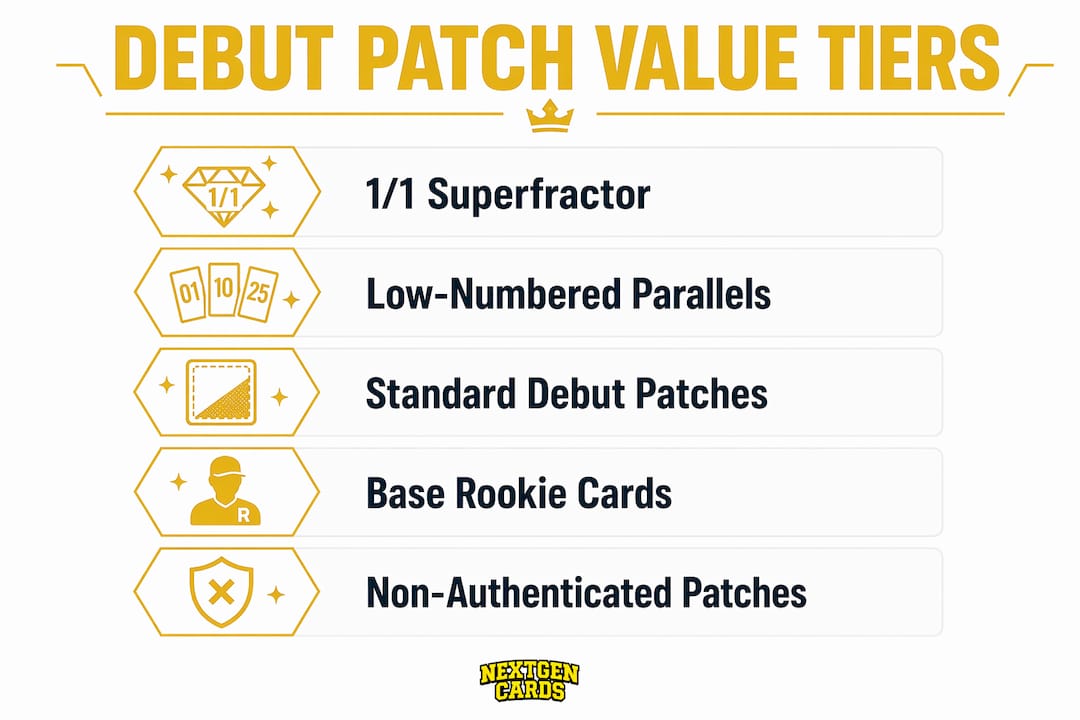
| Card Type | Provenance Level | Price Range (Skenes RDPA) |
|---|---|---|
| 1/1 Superfractor Debut Patch Auto | Highest | $1,000,000+ |
| Low-numbered parallel (/5 or /10) | Very high | $50,000–$100,000+ |
| Mid-tier parallel (/25 or /50) | High | $5,000–$20,000 |
| Base debut patch auto | Standard | $500–$5,000 |
Rookie card prices are not static. Value fluctuations can reach 300% before playoffs, and strong on-field performance correlates directly with large price spikes. A debut patch card for a prospect who struggles in their first season can lose value quickly. The same card for a player who wins Rookie of the Year can multiply in price within weeks.
Debut patches also benefit from what collectors call narrative value. Debut patches transform rookie cards from generic collectibles into narrative artifacts by providing an exact historical timestamp linked to the player’s first professional appearance. That storytelling aspect boosts both emotional resonance and commercial legitimacy compared to standard relic cards.
What are the common misconceptions and challenges in debut patch collecting?
The biggest misconception in patch collecting is that visual appeal equals value. A thick, colorful patch from a game-worn jersey looks impressive. But if it lacks a documented chain of custody, it is manufactured rarity, not authentic milestone memorabilia. Most patches manufacture scarcity through jersey cutting, producing dozens of visually similar pieces with no connection to a specific game or moment.
Collectors frequently overpay for visually striking patches that carry no provenance documentation. The patch may be real game-used fabric, but “game-used” is a broad category. A jersey worn during a mid-season practice game in September carries far less significance than one worn during a player’s first major league start.
Common pitfalls to avoid when collecting debut patch cards:
- Vague provenance claims: Phrases like “game-worn” or “player-used” without specific game documentation are red flags.
- Missing authentication holograms: Legitimate debut patches from Topps carry holograms. No hologram means no verified chain of custody.
- Confusing commemorative patches with debut patches: Some manufacturers produce patches to commemorate milestones without using actual game-worn fabric.
- Ignoring print run context: A debut patch card numbered to 100 is far less scarce than one numbered to 5, even if both carry the same player’s patch.
Pro Tip: Cross-reference any debut patch card against the manufacturer’s official checklist. Topps publishes set checklists that confirm which cards contain authenticated debut patches. If the card is not on that list, the “debut patch” claim is unverified.
Deeper provenance includes game-use allocation records, redemption documentation, and manufacturer notes validating the debut patch’s link to the player’s first game. These documents are what separate genuine debut patches from vague commemorative memorabilia. Always request them before purchasing at significant price points.
How can collectors and investors approach debut patch rookie cards strategically?
Smart collecting starts before the debut game happens. Experienced investors identify high-prospect players during spring training or minor league seasons, then position themselves to acquire debut patch cards early, before performance-driven price spikes occur. Here is a practical framework for approaching debut patch rookie cards:
-
Identify target players early. Follow prospect rankings from Baseball America or MLB Pipeline. Players ranked in the top 10 overall are the most likely to generate debut patch programs from Topps or Fanatics.
-
Monitor sales velocity, not just price. Rising demand frequency often signals impending price surges ahead of market breakthroughs. If a card is selling three times per week instead of once per month, that volume increase is a leading indicator of price movement.
-
Prioritize authentication documentation. Before any significant purchase, confirm the card carries a manufacturer hologram and matches the official set checklist. For high-value cards, third-party grading from PSA or BGS adds another layer of verified authenticity.
-
Understand the parallel structure. Every debut patch set includes multiple tiers. Low-numbered parallels carry the most upside but also the most risk. Mid-tier parallels offer a balance of scarcity and liquidity.
-
Track cross-sport expansion. The 2026 FIFA World Cup will feature over 600 unique debut patch cards, managed by Fanatics. This expansion signals that debut patch programs are growing beyond baseball. Early movers in soccer debut patch collecting may find significant upside as the market matures.
-
Balance investment and collecting intent. Debut patch cards carry real financial risk. Player performance, injuries, and market sentiment all affect price. Collect players you genuinely follow, so the card retains personal value even if the market softens.
For verified examples of authenticated debut patch rookie cards, the Paul Skenes Topps Standouts RPA is one of the most documented and discussed debut patch cards in the modern hobby.
Key Takeaways
Debut patches are the most credible form of relic card because their rarity is historical, not manufactured, making them the strongest foundation for both collecting and investment in the rookie card market.
| Point | Details |
|---|---|
| Authentic provenance drives value | Debut patches are removed and authenticated immediately after a player’s first game, creating a verified chain of custody. |
| Manufactured rarity is not the same | Standard patch cards cut jerseys into dozens of pieces; debut patches are structurally limited by the single debut game. |
| Market prices reflect milestone significance | Paul Skenes’ RDPA sold for $1.11 million, demonstrating the premium collectors pay for authenticated debut provenance. |
| Sales velocity is a key investment signal | Increasing transaction frequency often precedes price spikes, making volume tracking as important as price tracking. |
| Cross-sport growth creates new opportunities | Fanatics will produce over 600 debut patch cards for the 2026 FIFA World Cup, expanding the market beyond baseball. |
Why debut patches are the hobby’s most honest product
I have spent years watching the trading card market reward hype and punish collectors who confuse visual appeal with genuine scarcity. Debut patches are the exception to that pattern. They are the hobby’s most honest product because their rarity is not a manufacturer’s decision. It is a fact of history. One player, one first game, one jersey. That is the entire supply.
What I find most compelling is how debut patches resolve the credibility problem that has plagued relic cards for decades. Collectors have always known that “game-used” is a loose term. Debut patches tighten that definition to a single, documented moment. The storytelling power that comes with that specificity is real, and it shows up in prices.
My caution is about hype cycles. When a player like Paul Skenes dominates headlines, debut patch prices can detach from rational valuation. The card becomes a proxy for fan enthusiasm rather than a measured assessment of long-term career value. Buy on provenance and player fundamentals, not on social media momentum. The collectors who do that consistently are the ones who build portfolios that hold value across market cycles.
The expansion into soccer through the 2026 FIFA World Cup debut patch program is genuinely exciting. It signals that the concept has legs beyond baseball. But new markets also attract new speculation. Approach FIFA debut patches with the same discipline you would apply to baseball: verify provenance, check print runs, and buy players with documented elite potential.
— Richard
Explore authenticated debut patch rookie cards at Nextgencards
Nextgencards curates a focused selection of rare rookie autograph and relic cards, including debut patch examples from top-tier prospects and established stars. Every card in the inventory is authenticated, and the platform specializes in the kind of verified memorabilia that serious collectors and investors require.
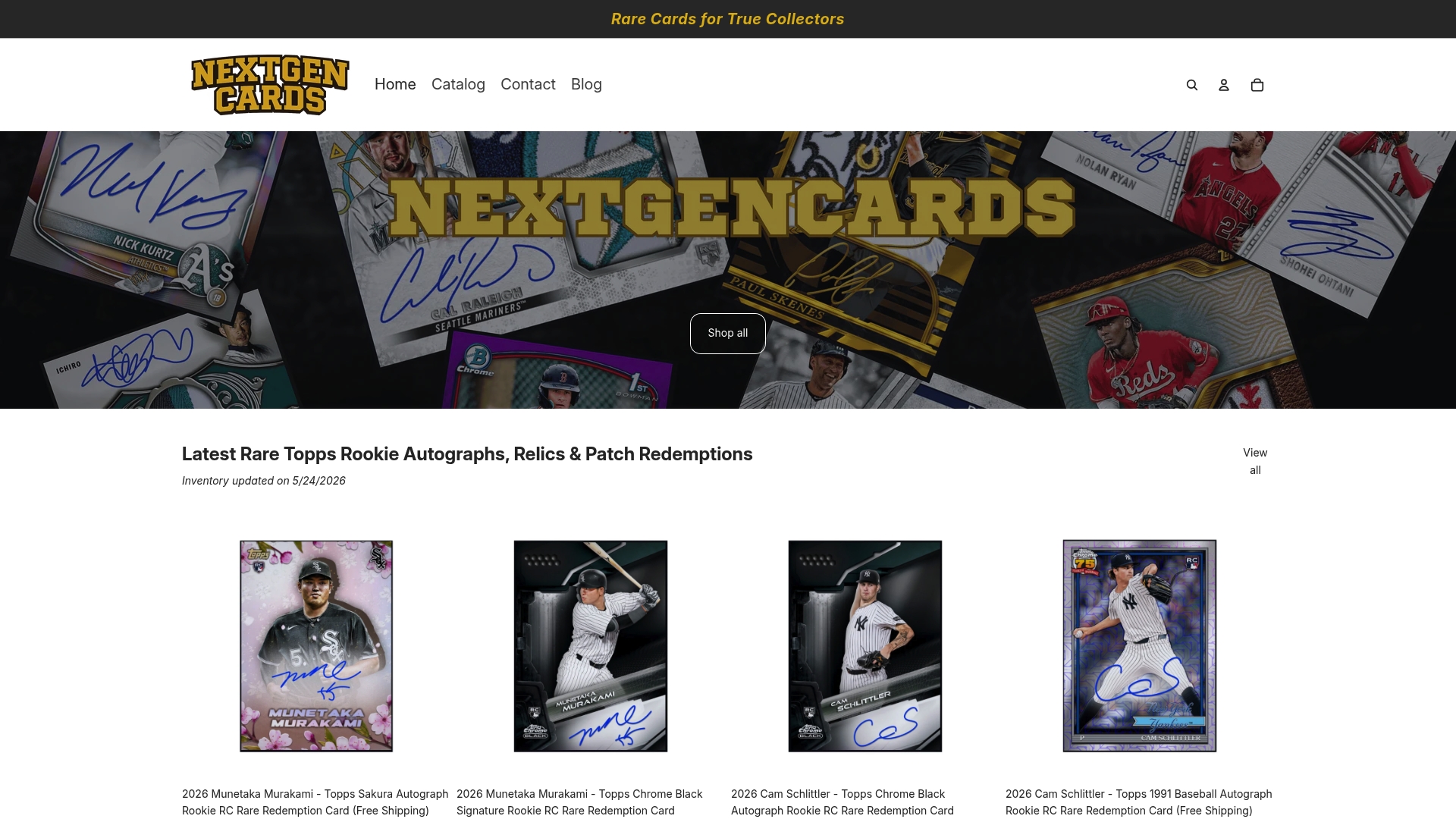
If you are building a collection around authenticated provenance, the rookie autographs and relics collection at Nextgencards is a strong starting point. The inventory includes limited-edition debut patch cards, redemption cards, and rare parallels from players like Shohei Ohtani and Aaron Judge. Free shipping is available on select items, and the catalog is updated regularly with new acquisitions. For collectors who prioritize authenticity over volume, Nextgencards delivers exactly the kind of curated access the hobby demands.
FAQ
What is a debut patch in a rookie card?
A debut patch is a piece of jersey fabric worn by a player during their first official professional game, authenticated and embedded into a rookie card. Topps removes and authenticates these patches immediately after the debut game using tamper-proof holograms.
Why do debut patches make rookie cards more valuable?
Debut patches are structurally limited to one game per player, making them true one-of-a-kind artifacts rather than manufactured rarity. That verified provenance drives collector demand and supports significantly higher market prices compared to standard game-used patch cards.
How can I verify a debut patch card is authentic?
Check for a manufacturer hologram on the patch window and confirm the card appears on the official Topps or Fanatics set checklist. For high-value purchases, third-party grading from PSA or BGS provides an additional layer of authentication.
How much are debut patch rookie cards worth?
Prices vary widely based on player, print run, and market conditions. Paul Skenes’ Rookie Debut Patch Autograph sold for $1.11 million at auction, while mid-tier parallels from the same set have sold for $5,000–$20,000.
Are debut patches expanding beyond baseball?
Yes. Fanatics will manage over 600 unique debut patch cards for the 2026 FIFA World Cup, marking a significant expansion of the debut patch concept into international soccer collecting.
Recommended
- Why Rookie Year Cards Matter for Serious Collectors – Next Gen Cards LLC
- Examples of Appreciating Rookie Cards: 2026 Collector Guide – Next Gen Cards LLC
- Top Places to Buy Rare Rookie Cards (Collectors Guide) | NextGenCards – Next Gen Cards LLC
- Why Kids Love Rookie Cards: A Parent’s Guide – Next Gen Cards LLC
0 comments