

NFL Collect by Topps is Topps’ officially licensed digital NFL card app, letting fans rip packs, trade, craft, and compete for in-app and physical rewards. Football fans are flocking to it because it puts licensed rookies, autographs, and limited parallels in your pocket for free. Think of it as a companion to the physical hobby, not a promise of profit. Every pull is entertainment first.
TL;DR:
- The app’s limited-run parallels, serial-numbered cards, and timed drops create scarcity that significantly boosts collector interest and demand.
- Digital rookies and performance-based contests can quickly increase a player’s digital value, but the market remains unpredictable and driven by seasonal storylines.
- Trading within the app relies on direct, collector-to-collector negotiations, with no official marketplace or fixed values, making community opinion a key influencer.
- Digital ownership is managed through secure, server-based account systems, with enforcement of serial numbers, but it does not replace the authenticity verification of physical cards.
- Connecting with fellow collectors through social media groups, contests, and team communities enhances engagement and can influence digital and physical collecting pursuits.
Table of Contents
- What Is the NFL Collect App by Topps? Features and Platforms
- How Does Collecting Work Inside NFL Collect?
- Trading, Contests, and Everyday Gameplay
- Why Do Collectors Get So Excited About Certain Drops?
- Getting Started: Beginner Tips for New Collectors
- From Digital Hype to Physical Cards: NextGenCards.shop’s Role
- What Technology Keeps Digital Cards Secure?
- How Does Trading and the Secondary Market Work?
- Digital Collecting vs. Physical Cards: What’s the Real Difference?
- Beyond Trading: How Do Collectors Connect With Each Other?
- Why Digital Collecting Feels Fresh Right Now
- Find the Physical Cards That Match Your Digital Collection
- Sources
- FAQ
What Is the NFL Collect App by Topps? Features and Platforms
NFL Collect by Topps is built by Topps Digital under official NFL and NFLPA licensing, which means the players, logos, and team branding you see are the real deal, not knockoffs. The app runs on iOS and Android, and both listings confirm it’s free to download with in-app purchases available for those who want to expand their collection faster.
Inside, you’ll find a rotating mix of tools built for both casual browsing and serious set building:
- A virtual card shop stocked with themed packs and limited-run releases
- Daily login packs that reward you just for showing up
- Seasons that structure content around the NFL calendar
- Missions that hand out rewards for completing specific tasks
- Contests tied to real-game scoring
- A crafting and combine system for upgrading cards
- Profile customization so your collection reflects your team loyalty
The App Store listing and Google Play page both show active update histories, which matters more than it sounds. A card app that stops updating stops mattering fast in a hobby driven by weekly game results and roster news.
How Does Collecting Work Inside NFL Collect?
Ripping packs is the heartbeat of the app. You browse the virtual shop, pick a pack type, and open it to reveal digital cards with varying levels of rarity. Topps doesn’t publish guaranteed pull odds, so treat every rip as a surprise rather than a calculated bet.
Once you’re collecting, a few mechanics define how deep you can go:
- Parallels — alternate color or design versions of a base card, often produced in smaller numbers
- Serial numbering — some cards carry a printed run size, so you know exactly how scarce that specific copy is
- Autographs and redemptions — premium digital signatures, sometimes tied to redemption processes that connect back to physical Topps products
- Crafting and combine — a system for combining duplicate or lower-tier cards to build up toward rarer ones
Set completion adds another layer of motivation. Finish a themed set and the app can reward you with bonus packs, exclusive parallels, or entries into Challenges that award actual physical Topps hobby boxes, a detail confirmed on Topps’ own digital landing page.
Pro Tip: Don’t rush to craft every duplicate card the moment you get it. Hold onto extras during set-building pushes. Duplicates are often exactly what a set challenge needs later.
Trading, Contests, and Everyday Gameplay
Collecting is only half the appeal. NFL Collect layers in social and competitive features that keep the app relevant every single week of the season.
- Trading works through an in-app exchange system. Before you finalize any deal, double-check card names, parallels, and serial numbers on both ends. Mismatched expectations are the most common source of trading regret.
- Real-time scoring contests let you build a lineup from your digital cards and compete based on actual player performance that week. It’s fantasy football’s energy, filtered through your card collection.
- Missions and Seasons structure the whole experience around the NFL schedule, with fresh objectives dropping as the season progresses, some of which loop back to physical rewards through Challenges.
The gameplay loop rewards fans who check in often, not just on Sundays.
Why Do Collectors Get So Excited About Certain Drops?
Scarcity drives attention in any card format, digital or physical, and NFL Collect leans into that hard. Limited-run parallels, timed drops, and low print counts all create a sense of urgency that keeps the app’s community buzzing.
A few forces consistently drive demand:
- Rookie hype — a standout rookie season can send interest in that player’s digital cards climbing fast
- Performance spikes — a big playoff game or a surprise MVP push tends to reignite chatter around a specific card
- Timed and event releases — drops tied to milestones or big games create short windows of high demand
- Low print runs — serial-numbered parallels feel more exclusive simply because fewer exist
Third-party app trackers show roughly 560,000 downloads for NFL Collect, a scale that reflects a genuinely active hobby community, even though aggregate ratings on that same tracker skew mixed. Big download numbers and passionate collectors don’t guarantee universal satisfaction, and that nuance matters more than the raw count.
None of this guarantees future value. Digital card demand can shift as fast as a season’s storylines, so collect for the enjoyment first.
Getting Started: Beginner Tips for New Collectors
New to the app? A little structure early on saves a lot of second-guessing later.
- Download and claim your daily reward. The app hands out free packs just for logging in, which is the easiest way to build a base collection before spending anything.
- Join an active Season. This gives your collecting purpose and ties your progress to real NFL games instead of random pulls.
- Decide what you’re chasing. Rookies, your favorite team, or a themed set each call for a different collecting approach; pick a lane before you start spending coins.
- Save coins for targeted drops. Impulse-ripping every pack that appears burns resources fast; patience pays off when a themed release you actually want finally lands.
- Trade carefully. Confirm serial numbers and parallel types before agreeing to a swap, and never move a trade outside the app’s built-in protections.
Pro Tip: If you’re torn between chasing rookies or building a full team set, pick whichever keeps you checking the app daily. Consistency, not perfection, is what makes a digital collection satisfying.
From Digital Hype to Physical Cards: NextGenCards.shop’s Role
Plenty of collectors who fall in love with a digital rookie pull start wondering what that same player’s real cardboard looks like. That instinct is common enough that Topps’ own digital cards guide walks through how digital and physical collecting connect for serious hobbyists.
Nextgencards offers a selection of rookie autographs, patches, and redemption cards for collectors seeking physical cards to complement their digital collecting experience.
- Curated inventory focused on rookies, autographs, and rare redemptions
- Shipping options on select items
- Resources that explain how digital and physical collecting intersect
| If digital hype centers on… | Consider looking for… |
|---|---|
| A hot rookie signature chase | A physical rookie autograph redemption card |
| A star player’s autograph parallel | A matching autograph rookie redemption card |
| Multi-signature chase cards | A triple autograph redemption card |
What Technology Keeps Digital Cards Secure?
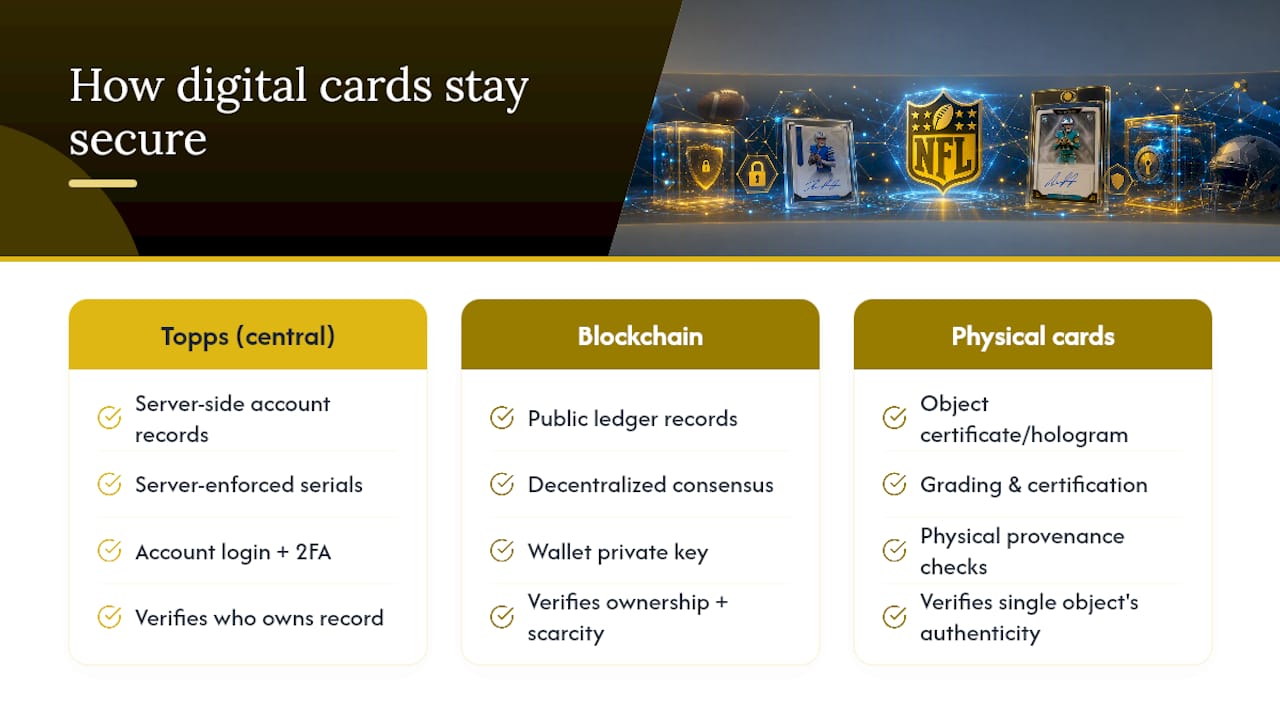
Digital ownership only feels meaningful if the system tracking it is trustworthy, and that’s a fair question for anyone new to the format. NFL Collect operates on centralized account infrastructure managed by Topps Digital rather than a public blockchain ledger, so ownership records, trade history, and pack contents live inside Topps’ own secured systems tied to your account login.
That approach differs from some newer collectible platforms that lean on blockchain verification to prove scarcity independently of the publisher. NFL Collect instead relies on account-level authentication and server-side tracking, the same general model used across most major mobile game economies. Your collection is tied to your Topps account credentials, which is why using a strong, unique password and enabling any available two-factor authentication on your device’s app store account matters more than people realize.
Serial numbers on limited parallels are recorded and enforced by the app itself, so you can’t accidentally end up with two collectors both holding “1 of 1” on the same card. That server-side enforcement is really the backbone of scarcity in a digital format. Without it, “limited edition” would just be a marketing phrase.
If you’re weighing digital card security against physical card authentication (holograms, autograph certification, third-party grading), the two systems solve different problems. Physical grading verifies a single object’s condition and authenticity. Digital tracking verifies who owns which unique record inside a closed database. Neither replaces the other, which is exactly why plenty of collectors run both.
How Does Trading and the Secondary Market Work?
Trading inside NFL Collect happens directly between users through the app’s built-in trade system rather than an open marketplace with public listings and price discovery. You propose a trade, the other collector accepts or declines, and the exchange settles instantly inside the app once both sides confirm.
That structure is different from platforms where cards get listed publicly with asking prices visible to everyone. Instead, value gets negotiated card-by-card, collector-to-collector, which means the same card might trade for different “prices” (in terms of what’s offered in return) depending on who wants it and how badly.
A few mechanics shape how trading actually plays out:
- Direct offers replace public listings, so finding a trade partner often means being active in the community rather than browsing a storefront.
- Confirmation steps exist to prevent accidental trades, giving both sides a chance to review exactly what’s changing hands before it’s final.
- No guaranteed liquidity means a card you want to move might sit until you find the right partner, unlike a marketplace with constant buy and sell activity.
Because there’s no centralized price list, informal community consensus tends to fill the gap. Collectors talk in forums, social media groups, and in-app chat about what a card is “worth” in trade terms, but none of that is an official valuation. Treat every trade as a collector-to-collector agreement based on mutual interest, not a verified transaction with guaranteed future resale value.
Digital Collecting vs. Physical Cards: What’s the Real Difference?
Digital and physical collecting scratch a similar itch, but the experience diverges in ways worth understanding before you commit your time to one or split it between both.
Physical cards give you something to hold, display, and grade. There’s a tactile satisfaction to opening a pack of cardboard that no screen fully replicates, and a professionally graded rookie autograph carries a permanence a digital record can’t quite match. Physical collecting also comes with real costs: storage, shipping, grading fees, and the patience required to track down a specific card from a specific seller.
Digital collecting through NFL Collect strips out most of that friction. Packs are available instantly, trades settle in seconds, and there’s no shelf space required for a collection that could technically grow indefinitely. The tradeoff is that you’re collecting inside a closed ecosystem controlled entirely by Topps’ servers, not an open market with independent appraisal or grading services.
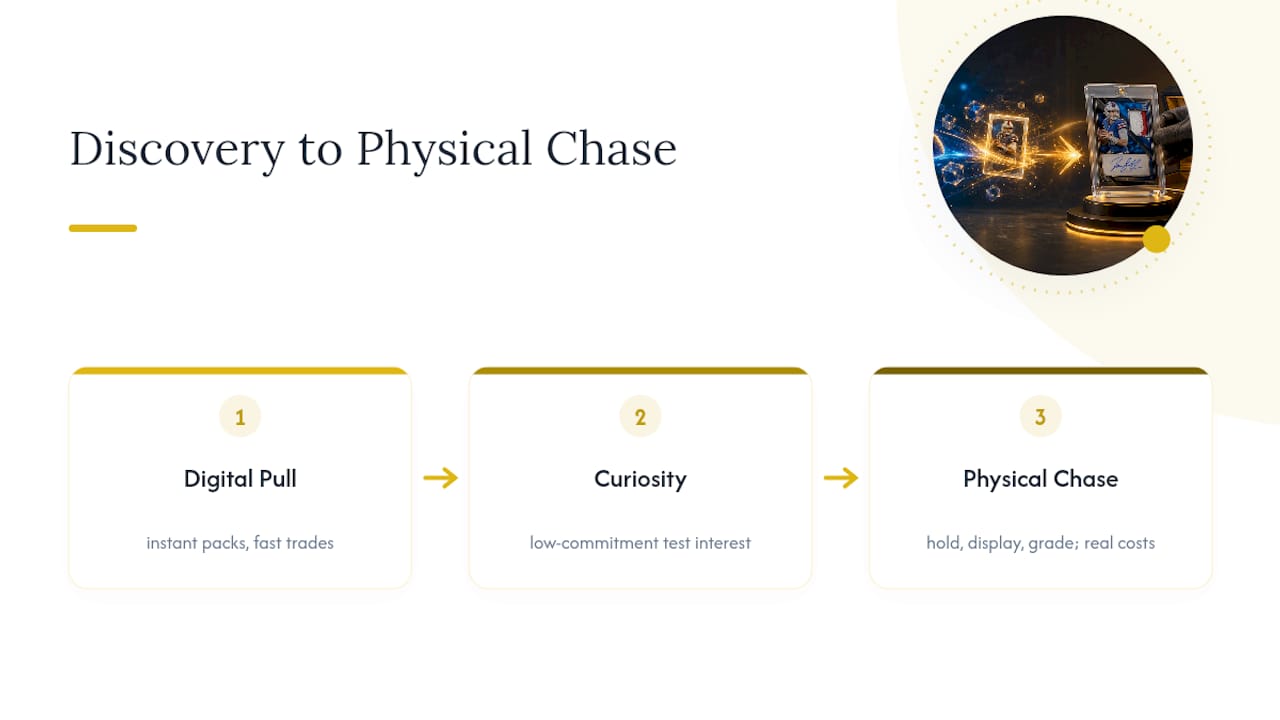
Where the two really complement each other is discovery. A digital rookie autograph pull can introduce you to a player before you’d ever think to chase their physical rookie card, and that curiosity is a big part of why digital collecting has grown alongside, not instead of, the traditional hobby. Plenty of collectors now treat the app as a low-commitment way to test interest in a player before spending real money on a physical rookie autograph.
Neither format is objectively better. They just serve different collecting instincts, and a lot of fans end up doing both.
Beyond Trading: How Do Collectors Connect With Each Other?
Contests and trades get most of the attention, but the community layer around NFL Collect runs deeper than head-to-head deals. Fans organize around shared interests the same way they always have in card collecting, just with digital tools layered on top.
Social media groups dedicated to the app are where a lot of the real conversation happens. Collectors post pulls, discuss upcoming Season content, and debate which rookies are worth chasing before a big game. That kind of informal fan club energy fills the gap that an in-app feature list can’t fully capture on its own.
Team-based collecting communities also form naturally, since fans of a specific franchise tend to cluster together whether they’re chasing that team’s rookies or just comparing rosters. This mirrors the same team-loyalty dynamics you see in fantasy football circles, where live performance data and community chatter drive a lot of the excitement week to week, a pattern well documented by resources like BetsyScore’s breakdown of weekly scoring trends.
Contests themselves double as a social hook, since comparing lineups and bragging about a big scoring week is half the fun. None of this requires a formal in-app chat feature to feel like community. It’s the same energy that’s always powered card collecting, just moved onto phones and group chats instead of card shop counters.
Why Digital Collecting Feels Fresh Right Now
What strikes me most about NFL Collect isn’t the pack mechanics. It’s how naturally digital and physical collecting have started feeding each other. A rookie’s big digital pull moment sends fans searching for that same player’s real rookie autograph, and that curiosity loop didn’t really exist a decade ago.
Seasonal storylines are the secret ingredient here. A surprise breakout receiver or a playoff-run quarterback creates the same buzz digitally that it does on the shelf at a card shop. If you’re new to this, start with the daily packs and let a Season pull you in. If a digital pull sparks a real chase, that’s exactly when a physical collection resource earns its place in your routine.
— Richard
Find the Physical Cards That Match Your Digital Collection
Once a digital pull gets you attached to a player, chasing down their real rookie autograph is the natural next move, and that’s exactly the gap Nextgencards fills. Instead of hunting scattered listings across the internet, you get a curated selection of rare Topps rookies, autographs, and redemption cards already vetted for authenticity.
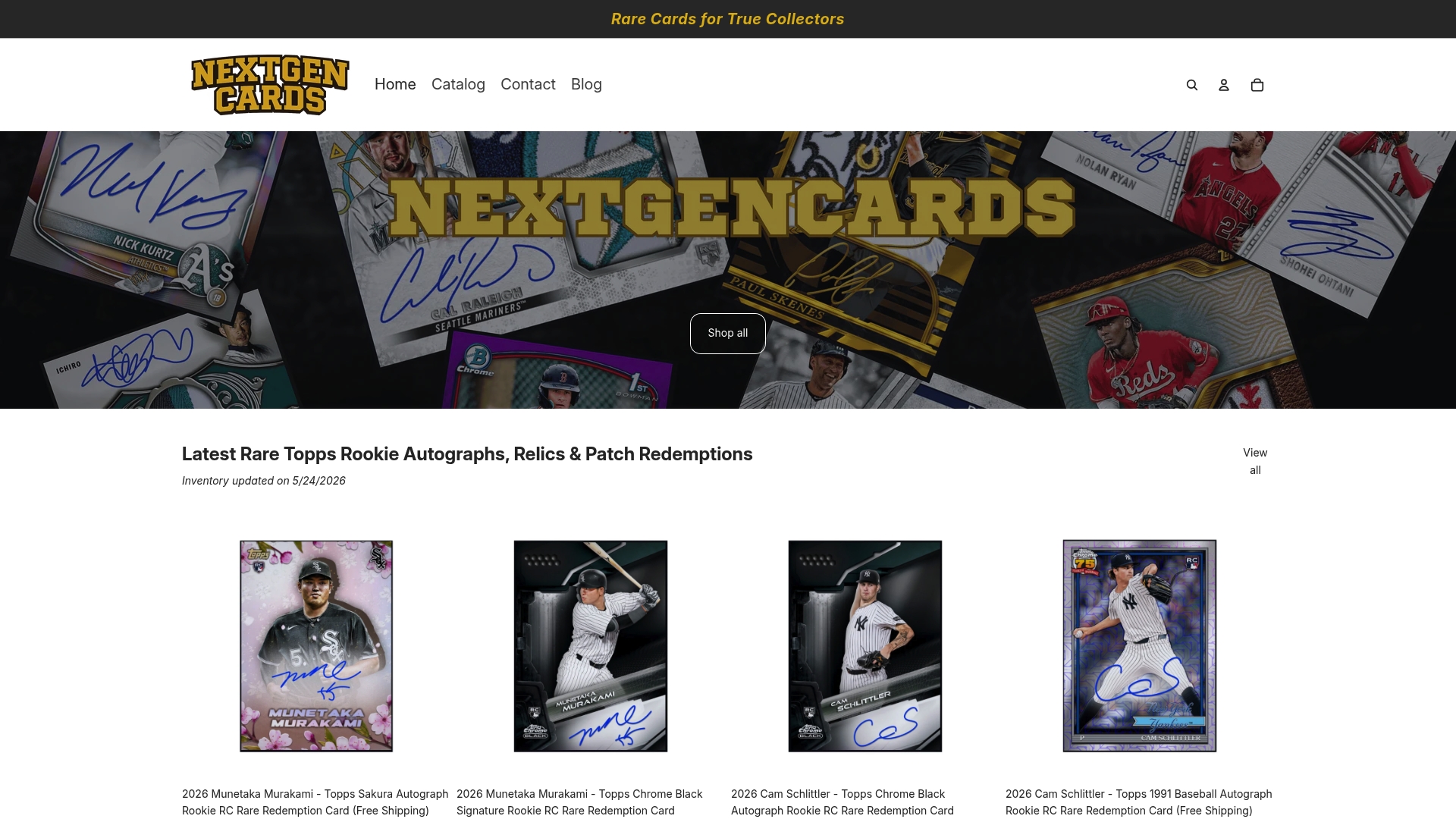
Right now, that catalog includes standout redemptions like the Junior Caminero Bowman Chrome Green Signature rookie card with free shipping, the Jacob Misiorowski All Star Game autograph rookie redemption, and the Cedric Coward Topps Flagship rookie autograph redemption. Each one gives you a physical counterpart to the kind of rookie hype that drives so much digital pack ripping.
Browse the full rookie autographs and relics collection to see what’s currently in stock and find the card that turns your digital chase into something you can actually hold.
Sources
FAQ
What Is the Best App for Collecting Football Cards?
NFL Collect by Topps stands out because it carries official NFL and NFLPA licensing, meaning the players, teams, and logos are authentic rather than fan-made recreations. It’s not the only digital collecting option out there, but it’s the officially licensed one built specifically around NFL content.
Are Topps NFL Cards Worth Anything?
Value in the card hobby depends on factors like player performance, print scarcity, and collector demand, and none of that is guaranteed or predictable. Treat both digital and physical Topps NFL cards as collectibles you enjoy first, not as a promised financial return.
Is There a Topps Football App Available?
Yes. NFL Collect by Topps is available for free on both the App Store and Google Play, with in-app purchases available for collectors who want to expand faster.
Is the NFL Collect App Free to Use?
Yes, downloading and playing NFL Collect by Topps is free, though optional in-app purchases let you buy additional packs or shop items. You can build a solid starter collection using just the free daily packs and Season rewards.
How Do I Trade Safely Inside the App?
Always confirm the exact parallel, serial number, and card name before accepting a trade offer. Keep every transaction inside the app’s built-in trading system rather than moving deals to outside platforms, where there’s no protection if something goes wrong.
0 comments