

Aaron Judge’s rookie card is defined as any 2017 MLB licensed base set card bearing the official RC logo, issued during his debut season with the New York Yankees. These cards form the foundation of his entire collectible ecosystem, spanning base issues, Chrome parallels, autographs, and ultra-rare superfractors. Whether you’re building a collection or evaluating an investment, understanding the Aaron Judge rookie card explained in full requires knowing which cards count, how grading shapes value, and what recent record sales mean for the market.
What cards officially count as Aaron Judge rookie cards?
The official rookie card designation applies only to a player’s first major-license base set card issued in their MLB debut year, carrying the RC logo. This system launched in 2006 through an MLB and MLBPA agreement. It replaced the chaotic pre-2006 era when dozens of cards from different sets all claimed rookie status. For Judge, that means his 2017 cards are the only true rookie cards in the hobby.
The key 2017 Aaron Judge rookie cards collectors recognize are:
- 2017 Topps #287 base — the most widely available true rookie card, featuring Judge preparing for an outfield catch at Yankee Stadium
- 2017 Topps Chrome #169 — a premium refractor version of the base image, with Blue, Gold, Orange, and Superfractor parallels
- 2017 Topps Bowman’s Best #1 — a rare Bowman rookie variant carrying the RC logo and strong collector demand
- 2017 Topps Bowman Wave 1 — another RC-designated issue with limited print runs
- 2017 Topps Gypsy Queen — a distinct design with autograph versions available
Prospect cards issued before 2017, including Bowman Chrome prospects from 2013 and 2014, do not carry the RC logo. They are pre-rookie cards. Many sellers mislabel these as rookie cards, which inflates perceived value and misleads buyers. Confirming card number, set, and RC logo before any purchase is the single most reliable way to avoid this mistake.
Pro Tip: The 2017 Topps base #287 shows Judge in an outfield stance at Yankee Stadium. If the image or card number does not match, you are not looking at the base rookie card.
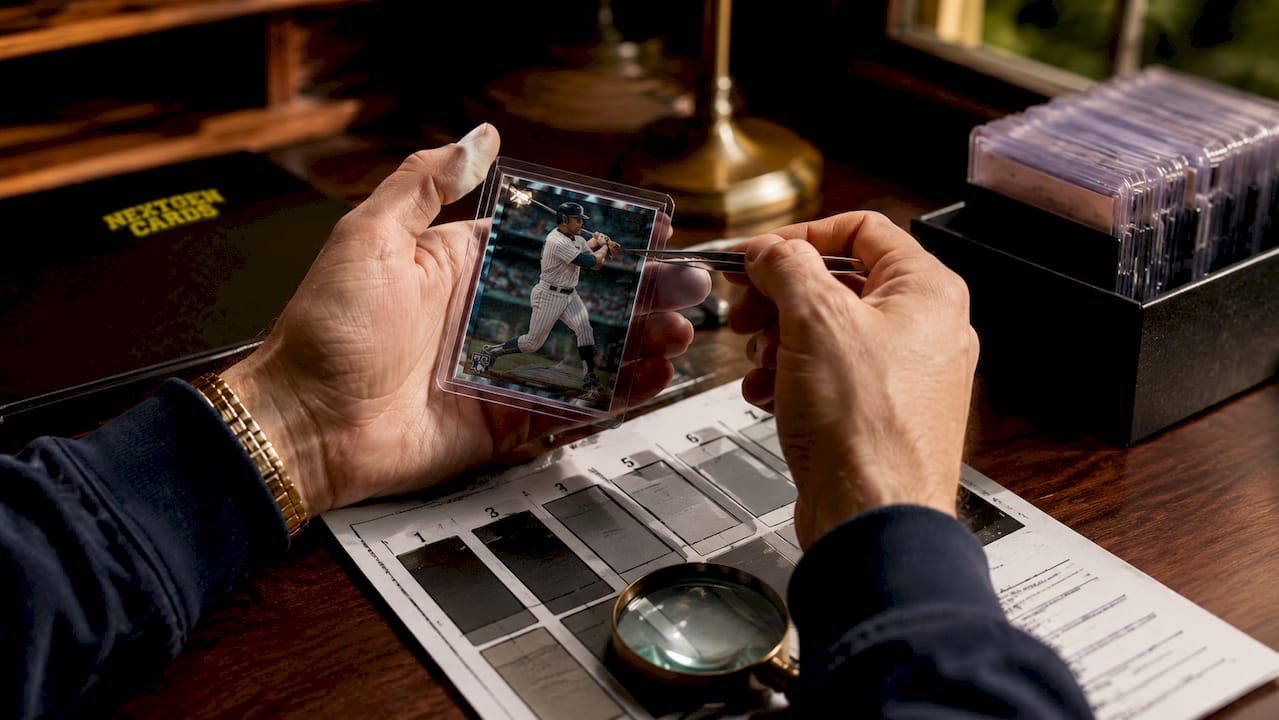
How does grading affect Aaron Judge card value?
Professional grading by PSA (Professional Sports Authenticator) is the standard for determining condition and, by extension, price. The PSA grading scale runs from 1 to 10, with PSA 10 Gem Mint representing a near-perfect card. The difference between a PSA 9 and a PSA 10 on a 2017 Topps Chrome Judge rookie can mean hundreds or even thousands of dollars in value.
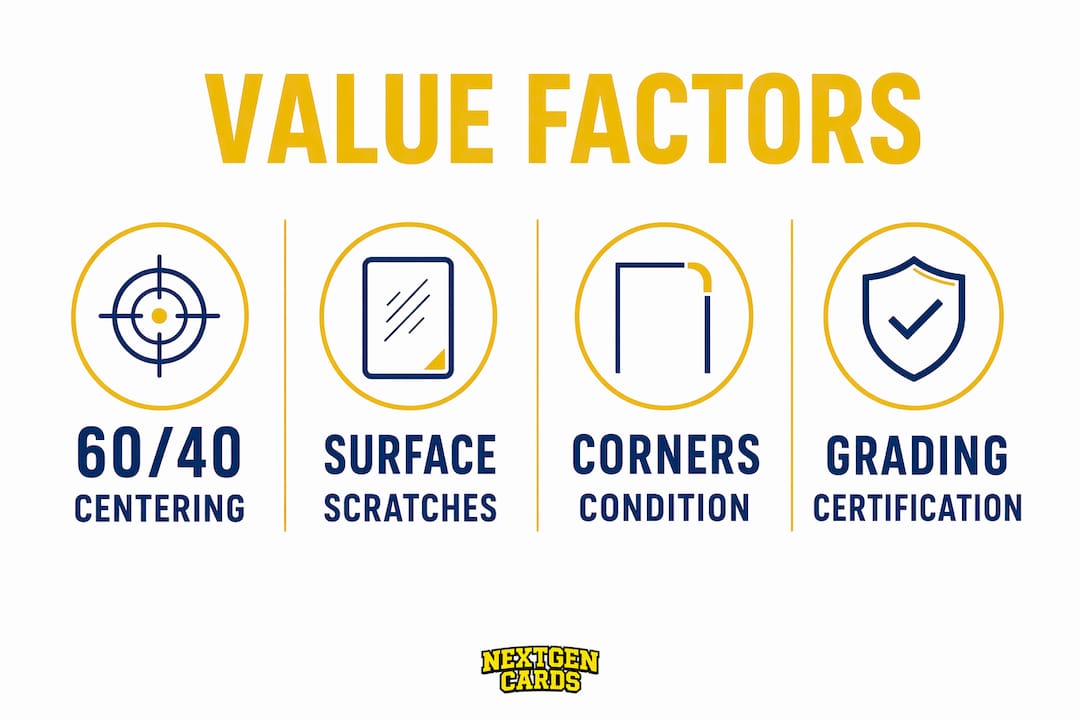
PSA evaluates four criteria on every submission:
- Centering — the card must meet a 60/40 or better ratio front and back for PSA 10 consideration
- Corners — sharp, unfrayed corners are required; even slight wear drops the grade
- Edges — clean, undinged edges with no chipping
- Surface — no scratches, print lines, or staining visible under inspection
Common grading killers include centering outside the 60/40 ratio, visible creases, and surface scratches. These defects are instant disqualifiers from PSA 10. Many collectors submit cards expecting a 10 and receive an 8 because of a flaw missed under normal lighting.
Pre-grading your card before submission saves money and time. Use a loupe or magnifier to inspect all four edges and both surfaces under bright light. Measure centering with a ruler against the card border. Proper centering measurement before submission is the most effective way to avoid a costly low-grade outcome.
Pro Tip: Photograph your card under natural light before submitting. If you can see a surface scratch or off-center border in the photo, PSA graders will see it too.
What is the market value of Aaron Judge rookie cards?
Aaron Judge rookie card values span a wide range depending on the specific card, its condition, and whether it carries an autograph or parallel designation. The 2017 Topps #287 base rookie sells raw for approximately $47–$52, making it the most accessible entry point for new collectors. That price reflects strong sustained demand for a card that remains liquid and easy to trade.
| Card | Rarity | Approximate Value (2026) |
|---|---|---|
| 2017 Topps #287 base (raw) | Mass print | $47–$52 |
| 2017 Topps Chrome base (raw) | Limited | $150–$300+ |
| 2017 Topps Chrome auto (numbered) | Very scarce | $1,000–$10,000+ |
| 2017 Topps Chrome Superfractor (1/1) | One of one | $5,200,000 (record sale) |
The top of the market is defined by a single transaction. Aaron Judge’s 2017 Topps Chrome Superfractor Autograph sold for $5.2 million on march 12, 2026. That sale reset market expectations for what a baseball card can be worth. The previous top public sale for a Judge card was around $300,000, making the Superfractor sale a generational leap.
“Once a top-end Judge card crosses $5 million, it resets market expectations. Superfractors have a unique aura and are the most iconic cards in the hobby.” — Sports Illustrated Collectibles
Superfractors and 1/1 parallels operate in a different market tier from base rookies. They are not liquid assets. They trade rarely and attract a small pool of ultra-high-net-worth buyers. Base and numbered Chrome parallels, by contrast, trade frequently and provide real price discovery for collectors at every budget level.
The long-term pricing outlook for Judge cards may see short-term flattening after the Superfractor sale, but nostalgic demand from collectors in 20 years could drive prices back up. Player performance remains the strongest driver of near-term value. A Hall of Fame trajectory keeps demand elevated across all tiers.
Practical tips for buying and preserving Aaron Judge rookie cards
Buying a genuine Aaron Judge rookie card requires more than finding a listing with the right player name. Condition, authenticity, and seller credibility all determine whether you get fair value.
Before purchasing any card, check these points:
- Confirm the card number matches the set. The Topps base rookie is #287. The Chrome rookie is #169.
- Look for the RC logo printed on the card face. No RC logo means no official rookie designation.
- Request high-resolution photos of all four corners, both surfaces, and the card back.
- Cross-reference recent sold listings on platforms like eBay to verify the asking price is in line with the market.
- For graded cards, verify the PSA certification number on the PSA website before completing any purchase.
Counterfeit and mislabeled cards are a real problem in the hobby. Sellers sometimes list pre-rookie Bowman prospect cards as rookies, or present reprints as originals. The RC logo and card number verification process eliminates most of these risks. If a seller cannot provide clear photos of the RC logo, walk away.
Preservation is equally important for long-term value. Store raw cards in penny sleeves inside rigid top loaders immediately after purchase. Keep cards away from direct sunlight, humidity, and temperature swings. For high-value cards, consider hard plastic one-touch magnetic holders. Graded cards in PSA slabs are already protected, but avoid dropping or stacking slabs in ways that could crack the case.
Pro Tip: Never clean a card surface before grading. Even a soft cloth can leave micro-scratches that drop a PSA 10 to a PSA 9. Submit cards exactly as found.
If you plan to submit for grading, check current PSA turnaround times and tier pricing before sending. Economy submissions can take months. Express tiers cost significantly more but return faster. For a card worth over $500 raw, the grading cost is almost always justified by the value increase a PSA 10 delivers.
Key Takeaways
The 2017 Topps RC-logo cards are the only true Aaron Judge rookie cards, and PSA 10 grades on Chrome parallels deliver the strongest return on investment across all collecting tiers.
| Point | Details |
|---|---|
| Official rookie card definition | Only 2017 MLB-licensed cards with the RC logo qualify as true Aaron Judge rookie cards. |
| Entry-level value | The 2017 Topps #287 base card sells raw for approximately $47–$52, making it accessible for new collectors. |
| Grading impact | A PSA 10 grade on Chrome parallels can multiply raw card value by several times over a PSA 9. |
| Record sale context | The 2017 Topps Chrome Superfractor sold for $5.2 million in march 2026, resetting the entire market’s expectations. |
| Buying safely | Always verify the RC logo, card number, and seller photos before purchasing any Judge rookie card. |
Why I think most collectors are still underestimating Judge’s base rookies
I’ve watched the Aaron Judge rookie card market closely since 2017, and the conversation almost always gravitates toward the Superfractor or the numbered Chrome autos. That makes sense. A $5.2 million sale is impossible to ignore. But I think the base 2017 Topps #287 is consistently undervalued relative to what Judge has become as a player and a cultural figure in baseball.
The base rookie at $47–$52 raw is one of the most liquid cards in the modern hobby. You can buy it, hold it, and sell it quickly without losing much to the bid-ask spread. That liquidity is rare. Most high-value parallels sit for weeks or months before finding a buyer at the right price. The base card trades daily.
My honest observation from watching grading submissions is that collectors consistently overestimate the condition of their raw cards. They buy a card that looks clean to the naked eye, submit it expecting a PSA 10, and get a PSA 8 back. That outcome is expensive and discouraging. The pre-grading discipline matters more than most hobbyists realize, and it’s a skill that takes time to develop.
For collectors building a Judge collection with a real budget, I’d prioritize a PSA 10 base rookie first, then a numbered Chrome parallel in the 50–99 range, then an autograph if the budget allows. That tier approach gives you exposure to Judge’s collectible value without concentrating everything in one ultra-rare card that may take years to sell. The 2026 autograph card guide from Nextgencards is worth reading before you commit to any autograph purchase.
The market for Judge cards is not going away. He is a generational talent with a legitimate Hall of Fame case already forming. The base rookies will be collected 30 years from now the same way Nolan Ryan and Ken Griffey Jr. rookies are collected today. Get in at the right tier for your budget and hold with patience.
— Richard
Authentic Aaron Judge rookie cards available at Nextgencards
Nextgencards carries a curated selection of rare Aaron Judge rookie cards and autograph variants for serious collectors.
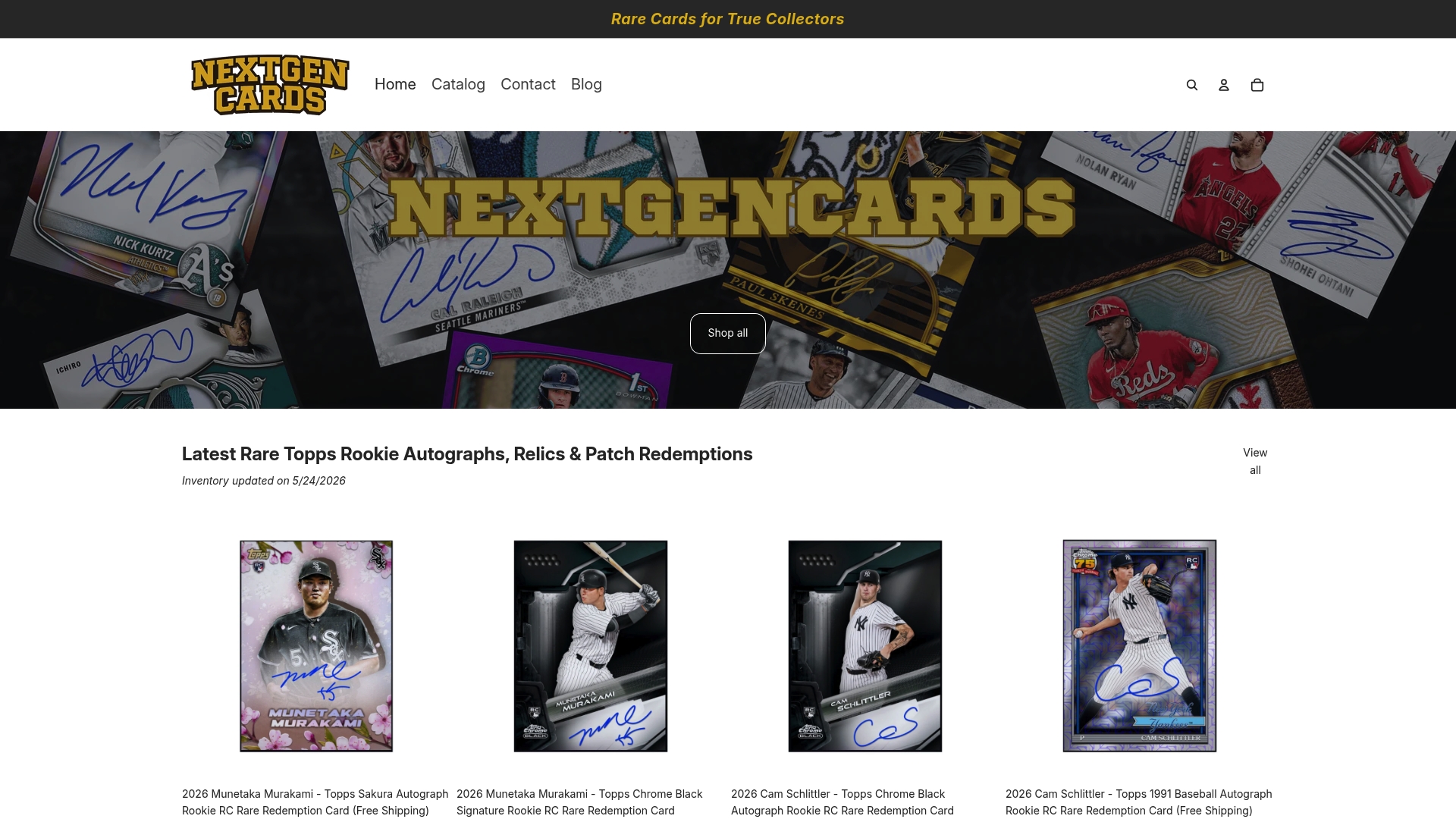
The inventory includes hard-to-find issues like the Topps Gypsy Queen autograph rookie and the Bowman Wave 1 rookie, both carrying the official RC designation. Every card listed is authenticated and described with full set and card number details so you can verify exactly what you’re buying. Free shipping is available on select items. For collectors ready to add a genuine Judge rookie or a premium autograph relic to their collection, the rookie autographs and relics collection at Nextgencards is the right place to start.
FAQ
What is the official Aaron Judge rookie card?
The official Aaron Judge rookie card is any 2017 MLB-licensed base set card carrying the RC logo, including the 2017 Topps #287 base and 2017 Topps Chrome #169. Cards issued before 2017 do not carry the RC designation and are classified as prospect cards.
How much is a raw 2017 Topps Aaron Judge rookie card worth?
The 2017 Topps #287 base rookie sells raw for approximately $47–$52 based on recent sales. Graded PSA 10 copies command significantly higher prices depending on the specific parallel.
What is the most valuable Aaron Judge rookie card?
The 2017 Topps Chrome Superfractor Autograph (1/1) sold for $5.2 million in march 2026, making it the most valuable Aaron Judge rookie card ever sold publicly.
How do I grade an Aaron Judge rookie card?
Submit the card to PSA with centering at 60/40 or better, clean corners, undamaged edges, and a scratch-free surface. Pre-inspect the card under bright light before submission to avoid a low-grade outcome.
Are Bowman prospect cards the same as Aaron Judge rookie cards?
No. Bowman prospect cards issued before 2017 do not carry the RC logo and are not official rookie cards. Only 2017 cards with the RC logo qualify as true Aaron Judge rookie cards under MLB and MLBPA standards.
Recommended
- Aaron Judge Autograph Card Hunting: 2026 Collector’s Guide – Next Gen Cards LLC
- NBA Rookie Class Card Explained: 2026 Collector’s Guide – Next Gen Cards LLC
- 2017 Aaron Judge - Topps Bowman’s Best #1 Rare Rookie RC Rare Card – Next Gen Cards LLC
- Examples of Appreciating Rookie Cards: 2026 Collector Guide – Next Gen Cards LLC
0 comments