

Topps Museum Collection 2026 arrives October 7, 2026, with pre-orders opening September 8 through the Topps release calendar. Hobby boxes ship one pack containing eight cards, and the format continues the brand’s tradition of guaranteeing premium autograph and relic content per box, including on-card signatures, autograph relics, and standalone memorabilia pieces. Collectors chasing jumbo patches and framed booklets should mark the pre-order date now.
TL;DR:
- Most value in the 2026 Topps Museum Collection comes from one-of-one autographed relics and jumbo patch cards, which are difficult to pull and highly sought after.
- The set features 100 base cards of current stars, legends, and rookies, with parallels and short prints that vary in rarity and market value.
- Buying specific high-value cards on the secondary market can often be more cost-effective than gambling on box hits.
- Rarity and player performance heavily influence long-term values, especially for unique relics and autographs of breakout rookies or established stars.
Table of Contents
- Release calendar and box configuration details
- What’s in the 100-card base set and parallels
- Autograph and memorabilia programs worth chasing
- How to judge value before you buy a box
- Pre-order timing and buyer checklist
- Notable rookies and star names to watch
- How this year’s set differs from past Museum Collection releases
- Short prints and one-of-one rarity explained
- What drives card values after the release ships
- What this release means for your collecting strategy
- Where to find related rookie autographs and redemption cards
- Sources
- FAQ
Release calendar and box configuration details
The official Topps product page confirms the 2026 Topps Museum Collection Baseball set is available for pre-order, with a Topps.com pre-order window that opened September 8, 2026, according to Beckett’s checklist coverage. The official release date lands on October 7, 2026, though Topps notes release dates can shift.
Each hobby box carries one pack of eight cards, a configuration that concentrates hit odds into a smaller card count than base-heavy products. Boxes are typically sold by the case, and past Museum Collection releases have guaranteed an autograph plus a separate autograph relic per box, a pattern hobby box-configuration reporting expects to continue in 2026.
Pricing observed at pre-order has ranged widely depending on retailer and timing. Key facts to know before you commit:
- Pre-order opened: September 8, 2026, per the Topps release calendar.
- Release date: October 7, 2026, subject to change.
- Box format: one pack, eight cards per hobby box.
- Observed pre-order price: roughly $409.99 to $550 depending on retailer, according to Cardlines’ pricing report.
Early Topps direct pre-orders have a history of selling out quickly, so acting near the pre-order window matters more than waiting for a discount.
What’s in the 100-card base set and parallels
The base set runs 100 cards, spanning current stars, franchise legends, and rising prospects, according to Beckett’s checklist breakdown. Museum Collection has always leaned toward a museum-gallery aesthetic, pairing clean borders with portrait-style photography that photographs well for display cases and frame inserts.
Parallels and short prints add depth beyond the base run, and collectors chasing specific colors or serial numbers should check the master checklist before buying singles blind. Expect the usual mix of numbered parallels at varying print runs, with the lowest numbered versions carrying the most weight on the secondary market.
Notable checklist elements include:
- Base set: 100 cards covering veterans, legends, and rookies.
- Parallels: numbered tiers ranging from higher print runs down to true one-of-ones.
- Inserts: themed subsets separate from the base and autograph programs.
- Framed and booklet cards: multi-panel designs built for autographs and relics rather than base content.
Beckett’s coverage includes a downloadable master checklist and team-set lists, which is the fastest way to confirm whether a specific player has a base card, parallel, or insert in this release before you commit to a box or a single.
Autograph and memorabilia programs worth chasing
Museum Collection earns its premium price tag through named autograph and relic programs rather than base-card volume. The Topps product page names five core programs for 2026:
- Museum Framed Autographs: on-card signatures set inside a framed design built for display.
- Atelier Autographed Books: multi-panel booklet cards combining autographs with artistic paneling.
- Momentous Material Jumbo Patch Autographs: oversized game-used patches paired with an on-card signature.
- Jumbo Bat Nameplate Relics: bat-piece relics featuring a player’s nameplate section.
- Single-Player Primary Pieces Triple Relics: three-swatch relic cards focused on one player.
One-of-one autographed bat relics and jumbo patch autographs typically drive the highest resale prices in the release, according to Sports Illustrated’s collectibles analysis, because their scarcity outweighs almost every other card in the set.
Every hobby box guarantees at least one autograph and usually a separate autograph relic, but the rarest booklet cards and jumbo patches sit at the top of a steep rarity pyramid. Set your expectations accordingly: most boxes deliver solid mid-tier autographs, not the headline 1/1.
How to judge value before you buy a box
Sports Illustrated’s collectibles reporting warns that 1/1 autos and jumbo patch relics drive most of the box’s return on investment, and ignoring their low pull rates leads to unrealistic expectations for the average box buyer, a point confirmed in the same analysis. That means the math on a $409.99 to $550 box often depends on landing one specific card type, not the guaranteed hits.

For collectors chasing a particular player rather than a random pull, buying a single card directly is frequently more efficient than gambling on a box. Compare the observed pre-order price against completed secondary-market sales for comparable hits before deciding which route fits your budget.
Pro Tip: Before buying a box, price out the specific autograph or relic card you want on the secondary market. If a single sells for less than a full box, buy the card, not the gamble.
NextGenCards.shop offers redemption cards and rookie autographs for collectors chasing specific players, with free shipping on select items.
Pre-order timing and buyer checklist
Topps direct pre-orders can sell out within hours of opening, while retailer pre-orders sometimes run longer windows at different price points. Compare both before committing, and confirm shipping timelines since redemption cards can take months to arrive after a box break.
- Check the Topps release calendar for the current pre-order status and any date changes.
- Compare Topps direct pricing against retailer pre-order pricing before ordering.
- On arrival, verify serial numbers and confirm the autograph is genuinely on-card, not a sticker auto, if that distinction matters to your collection.
- If you receive a redemption card, register it promptly and track the redemption window closely.
Notable rookies and star names to watch
Museum Collection 2026 mixes established stars with a strong rookie class, a combination Sports Illustrated’s coverage points to as the release’s main demand driver. Sets that pair recognizable veterans with elite rookie prospects tend to hold collector interest longer than rookie-only or veteran-only releases.
Outside the baseball checklist itself, the broader Topps redemption market this year includes standout rookie and star chase cards worth tracking, such as the 2024 Junior Caminero Topps Bowman Chrome Green Signature Rookie and the 2023 Mason Miller Topps Chrome Platinum Anniversary Autograph Rookie, both of which illustrate how early rookie autos can carry outsized long-term value compared to their original box cost.
Football and basketball crossover chases have shown similar patterns this year. The 2026 Sal Stewart Topps Heritage Blue Ink Autograph Rookie and the 2026 Fernando Mendoza Topps Signature Series Silver Autograph Rookie both reflect the same collector logic driving Museum Collection demand: buyers want a documented rookie season tied to an on-card signature, not just a name on cardboard. Whether that logic plays out for any specific 2026 Museum Collection rookie will depend heavily on performance once the season starts.
How this year’s set differs from past Museum Collection releases
Museum Collection has consistently positioned itself as Topps’ display-focused, framed-autograph release, and 2026 continues that identity rather than reinventing it. The core programs, Museum Framed Autographs, Atelier Autographed Books, and jumbo relic pieces, carry forward the same design philosophy that has defined the brand for years, per the Topps product listing.

What changes year to year is mostly checklist composition and box math. The base set holding steady at 100 cards keeps the product’s structure familiar, but the specific rookie class and veteran selections shift with each season’s storylines. Pricing has also crept upward, with 2026’s observed pre-order range of $409.99 to $550 reflecting the continued rise in raw materials and licensing costs that hobby analysts have tracked across premium releases, per Cardlines’ reporting.
For returning collectors, the biggest practical difference is less about card design and more about which named programs land which players. A Momentous Material Jumbo Patch Autograph of a rookie having a breakout year will always outperform the same program pulled on a bench player, regardless of how the set itself changes. That dynamic hasn’t shifted from year to year, and it’s the reason experienced collectors watch player performance as closely as checklist announcements.
Short prints and one-of-one rarity explained
The steepest rarity tier in Museum Collection sits at true one-of-one cards, typically unique autographed bat relics or single-panel booklet autos that exist as a single copy across the entire print run. These cards represent the ceiling of the release’s chase value, and Sports Illustrated’s analysis treats them as the primary driver of any box’s real return on investment.
Below the 1/1 tier, numbered parallels and short-printed inserts create a rarity ladder that most collectors interact with more directly. A parallel numbered to a small print run carries real scarcity value, but nowhere near the premium commanded by a unique relic or autograph.
Collectors chasing short prints should treat the master checklist as a starting point, then track completed sales for specific serial numbers before assuming a card’s rarity alone guarantees a high price. Rarity sets the ceiling, but demand for the specific player determines whether that ceiling gets reached.
What drives card values after the release ships
Once Museum Collection 2026 hits the secondary market, prices typically settle based on a mix of player performance, print run scarcity, and how the guaranteed hit types compare to what buyers expected at pre-order. Cards tied to players having strong seasons see the fastest price movement, while autographs of underperforming rookies often cool quickly regardless of how limited the print run was.
The Cardlines pricing report notes that observed pre-order pricing already varied by more than $100 depending on retailer and timing, and that spread tends to widen further once boxes hit secondary marketplaces and initial breaks reveal actual pull rates. Buyers who track completed sales rather than asking prices get a clearer read on where a card is actually trading.
Long-term value in Museum Collection has historically favored cards that combine a recognizable name with a premium relic or autograph type, rather than base rookies alone. That pattern holds for 2026’s named programs: a jumbo patch or framed autograph of a player who has a strong debut season is far more likely to appreciate than a common parallel of the same player.
What this release means for your collecting strategy
Museum Collection 2026 rewards patience and player research more than box volume. Chase the framed autographs and jumbo relics if you enjoy display-quality cards, but buy singles when you already know which player you want.
Speculative breaks can pay off on a hot rookie, though the odds favor buy-and-hold collectors who target specific cards over random box openers.
— Richard
Where to find related rookie autographs and redemption cards
If Museum Collection’s autograph programs have you thinking about building out a broader rookie collection, NextGenCards.shop focuses specifically on rare redemption cards, rookie autographs, and memorabilia pieces across MLB, NBA, and NFL.
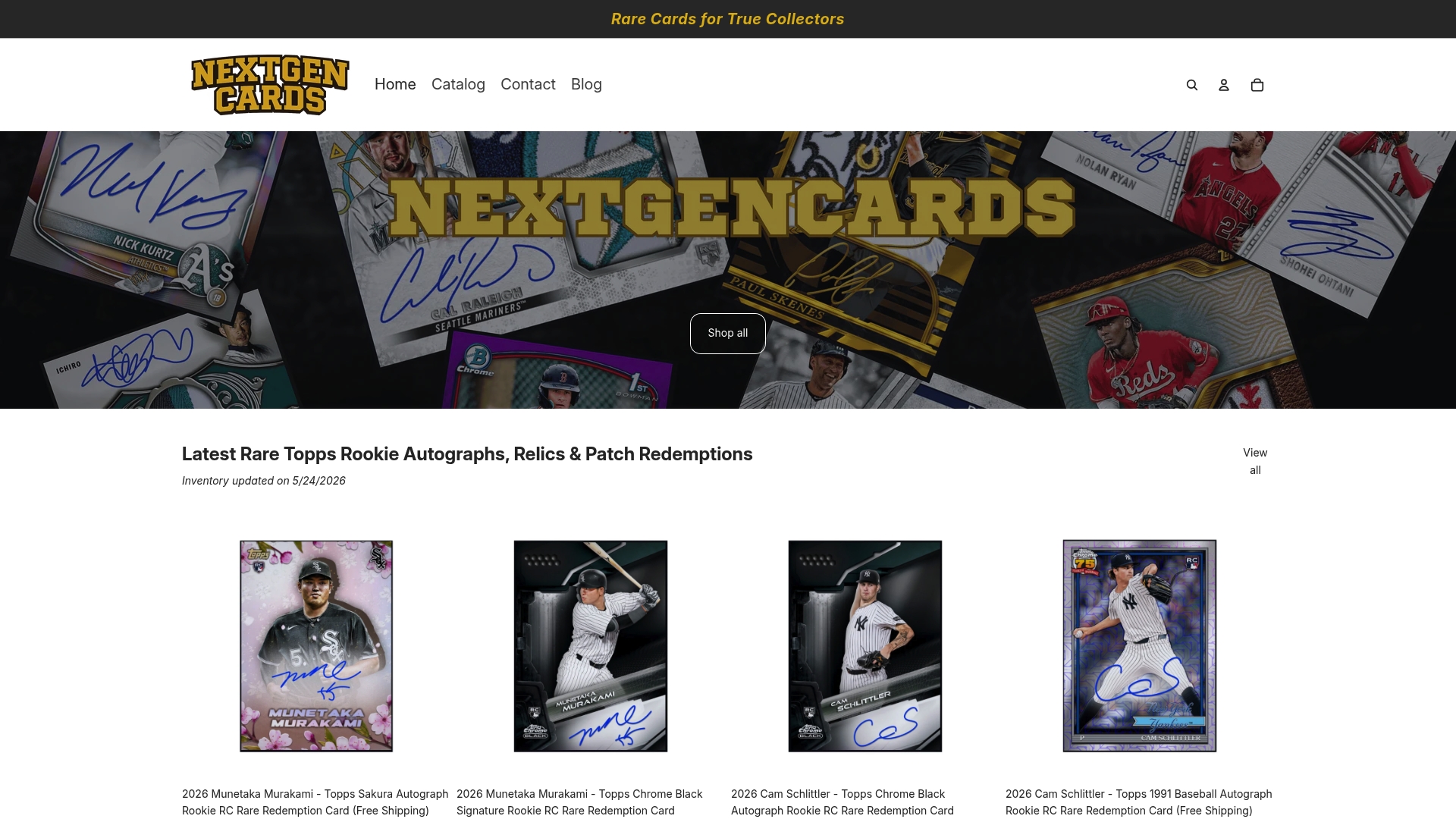
The catalog includes curated categories built for collectors chasing a specific player or hit type rather than a random pull:
- MLB, NBA, and NFL redemption cards covering current stars and rising prospects.
- Rookie Autograph Redemptions for collectors targeting a player’s first licensed signature.
- Rookie Patch & Relic Redemptions for game-used memorabilia paired with rookie-year cards.
- Multi-Player Card Redemptions for shared cards featuring multiple athletes on one piece.
Standout current listings include the 2026 Jalen Brunson Topps Champions Autograph and the 2026 Jalen Brunson Topps Champions Jersey Patch, both offered with free shipping. Browse the rookie autographs and relics collection to see what’s currently available.
Sources
- 2026 Topps Museum Collection Baseball Checklist, Team Sets
- 2026 Topps Museum Collection Baseball: premium top chases (Sports Illustrated)
- 2026 Topps Museum Collection Baseball: The Cost Of Fine Art Continues To Rise (Cardlines)
FAQ
Is Topps Museum Collection considered a high-end product?
Yes, Museum Collection sits among Topps’ premium releases, built around framed autographs, jumbo relics, and booklet-style memorabilia cards rather than base-heavy packs. Its observed pre-order pricing of $409.99 to $550 per box, reported by Cardlines, reflects that high-end positioning.
What is the 2026 Topps Museum Collection baseball set?
It’s a premium baseball release from Topps built around named autograph and relic programs, including Museum Framed Autographs and Momentous Material Jumbo Patch Autographs, confirmed on the official Topps product page. The base set runs 100 cards, and boxes ship one pack of eight cards per Beckett’s coverage.
Which 2026 Topps cards are likely to hold the most value?
One-of-one autographed bat relics and jumbo patch autographs are the cards most likely to command strong resale prices, according to Sports Illustrated’s analysis. Cards tied to breakout rookies or established stars having strong seasons tend to outperform common parallels regardless of print run.
Are Topps Museum Collection cards worth the price?
Value depends on what you’re chasing: collectors targeting the framed autograph or jumbo relic programs generally find the display quality worth the premium price. Buyers hoping every box returns its cost should track pull rates carefully, since pull-rate reporting shows the rarest hits driving most of a box’s real return.
0 comments