

The rarest Shohei Ohtani card types are single-edition autographed cards and scarce Japanese parallels, commanding the highest auction prices in the modern hobby. The 2025 Topps Chrome Dual MVP Logoman patch autograph sold for $2.16 million, setting a benchmark that defines true ultra-premium rarity. With over 24,000 unique Ohtani cards in circulation, separating genuine scarcity from mass-produced noise is the most critical skill any serious collector or investor can develop.
1. What makes a Shohei Ohtani card rare?
Rarity in the Shohei Ohtani card market is defined by four measurable factors: print run, autograph presence, grading population, and card origin. Understanding each one prevents costly mistakes.
Print run and serial numbering are the clearest signals. A card numbered 1/1 is a one-of-one, meaning only a single copy exists. Cards numbered to 10, 25, or 50 are still considered low-run and carry strong collector premiums. Serial numbering appears directly on the card face, making verification straightforward.
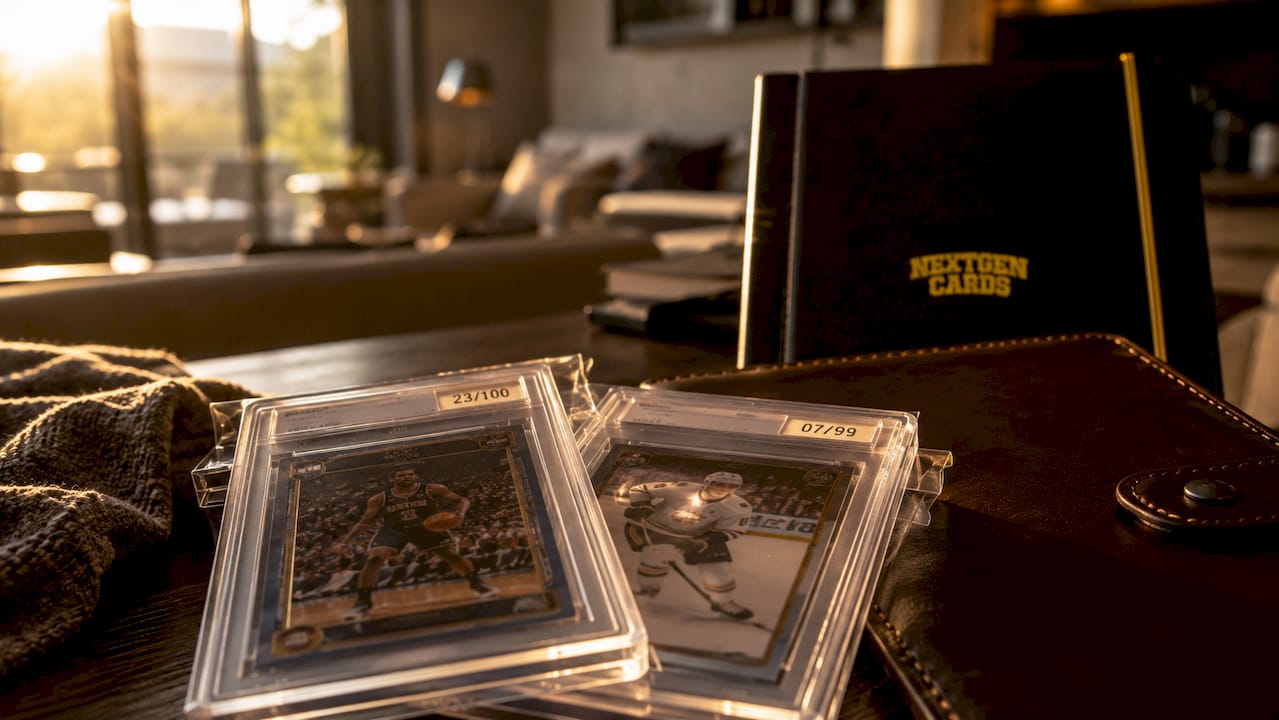
Grading population is the second critical metric. PSA 10 population counts are the definitive measure of long-term investment risk. A card with only 59 PSA 10 copies is objectively scarcer than one with 15,000. Population reports from grading services like PSA are publicly accessible and should be checked before any significant purchase.
Autograph authenticity adds a separate layer of value. A certified on-card autograph from Ohtani, verified by the card manufacturer, carries more weight than a sticker auto. On-card signatures are harder to produce and more desirable to advanced collectors.
Card origin matters more than most collectors realize. Japanese-issued cards from manufacturers like BBM have far smaller print runs and graded populations than their MLB counterparts. That structural scarcity creates a persistent premium in both domestic and international markets.
- Serial-numbered parallels (especially 1/1, /5, /10, /25) represent the top tier of rarity
- PSA 10 population under 100 copies signals genuine investment-grade scarcity
- On-card autographs outperform sticker autos in long-term collector demand
- Japanese BBM cards carry lower graded populations than any MLB flagship set
Pro Tip: Before buying any Ohtani card marketed as rare, pull the PSA population report. If the PSA 10 count exceeds 1,000 copies, the card is not scarce by any objective standard.
2. 1/1 autographed cards: the absolute pinnacle
One-of-one autographed cards represent the highest tier in the Ohtani card universe. These are not just rare. They are singular objects, and their auction results reflect that status.
The 2025 Topps Chrome Dual MVP Logoman patch autograph featuring both Ohtani and Aaron Judge sold for over $2 million. That price reflects the convergence of a 1/1 print run, a game-used logo patch, and dual autographs from two of baseball’s biggest names. No other card type in the hobby combines those three elements at that level.
The Logoman designation refers to a card containing the actual MLB logo patch cut from a player’s jersey. These patches are extremely limited by nature. Only one logo appears per jersey, making Logoman cards structurally impossible to mass-produce.
For collectors targeting this tier, the 2018 Topps Finest Rookie Auto represents a more accessible entry point into certified Ohtani autograph cards with verified authenticity and strong secondary market demand.
3. ‘Sho Time’ Alter Ego Superfractor: rarest insert card
The Topps Chrome “Sho Time” Alter Ego Superheroes insert set produced one of the most statistically improbable pulls in modern card collecting. The 1/1 Superfractor version carries pull odds of 1:389,424 packs. That figure is not a typo. A collector would need to open nearly 400,000 packs to expect a single copy.
The 1/1 Superfractor from this set sold for $105,000 at auction. That result places it firmly among the top insert card sales in baseball card history. The combination of a beloved player, a creative design concept, and an astronomically low print run drove that result.
Super Short Print inserts, commonly called SSPs, are a category where Ohtani cards consistently outperform expectations. The “Sho Time” set is the clearest example of how insert rarity can rival or exceed base parallel rarity in market value.
4. 2013 BBM Japanese rookie autographed parallels
Japanese-issued Ohtani cards from his Nippon Professional Baseball years represent a distinct and historically significant category. The 2013 BBM 1st Version “Red Wing” rookie card has approximately 829 PSA graded copies across all grades. PSA 10 copies of this card sell for premiums exceeding $11,000.
Low-numbered autographed parallels from the 2013 BBM set push well into six-figure territory at auction. These cards predate Ohtani’s MLB career entirely, giving them a historical anchor that no American-issued card can replicate. They document the beginning of his professional career in Japan, which adds a layer of significance that resonates strongly with both Japanese and international collectors.
International demand from Japan significantly supports Japanese-issue card premiums. That cross-market demand insulates this segment from US-only market fluctuations, making these cards more stable during domestic hobby downturns.
5. Panini Kaboom case hits: low population, high demand
Panini Kaboom cards are a category that serious collectors track closely. These cards are distributed as case hits, meaning one copy appears roughly once per case of product. The Ohtani Kaboom card has only 110 total graded copies, with just 59 of those holding a PSA 10 grade.
That PSA 10 population of 59 is remarkably low for a card featuring a player of Ohtani’s profile. For comparison, the 2018 Topps Chrome base rookie has more than 15,000 PSA 10 copies. The Kaboom’s scarcity is structural, not manufactured by marketing language.
The bold, graphic design of Kaboom cards also drives collector appeal beyond pure rarity metrics. These cards attract both sports card collectors and art-focused buyers, broadening the demand base and supporting price stability.
6. Japanese versus MLB rookie cards: a rarity comparison
The grading population gap between Japanese and MLB Ohtani cards is substantial and directly affects market pricing.
| Card Type | Approximate PSA Graded Copies | PSA 10 Price Range |
|---|---|---|
| 2013 BBM 1st Version “Red Wing” | ~829 total | $11,000+ |
| 2018 Topps Chrome Rookie | 15,000+ PSA 10 copies | Varies widely |
| 2013 BBM Autographed Parallel | Extremely limited | Six figures at auction |
| 2018 Topps Finest Rookie Auto | Low-to-mid population | Strong secondary demand |
The data above shows a clear pattern. Japanese cards have structurally lower populations because fewer packs were produced and fewer collectors submitted them for grading. That combination creates genuine scarcity that MLB flagship cards cannot match at the base level.
Market observers recommend focusing on rookie-year anchors, condition-sensitive Chrome cards, and authentic Japanese issues that have clear demand and repeat sales history. That framework applies directly to the BBM versus MLB comparison. Japanese cards satisfy all three criteria simultaneously.
The 2018 Topps Archives Rookie Autograph represents a strong MLB-issued alternative for collectors who want a certified rookie autograph with verified authenticity and accessible pricing relative to the BBM tier.
7. Overproduction and the misconception of rookie card rarity
The single most common mistake Ohtani card buyers make is assuming rookie status equals rarity. The 2018 Topps Chrome base rookie has more than 15,000 PSA 10 graded copies. That volume limits price appreciation regardless of how prominent Ohtani becomes as a player.
“Cards that can be easily explained and have repeat sales data maintain stronger value.” — Shohei Ohtani Market Guide for Collectors
Mass-produced inserts create a separate problem. Collectors often confuse mass-produced inserts with artificially rare cards. The “All Aces” insert is a documented example. The 2023 version was common and widely available. Later versions with low print odds were mistaken for the original, causing collectors to overpay based on name recognition rather than actual scarcity.
The practical lesson is direct. Rookie logos and insert branding are marketing signals, not rarity guarantees. Only serial numbering, grading population data, and verified autograph presence provide objective rarity confirmation.
- Base rookie cards with large PSA populations offer limited investment upside
- Insert sets require version-specific research before purchase
- “Rookie” designation alone does not indicate scarcity
- Artificial rarity through rebranding creates pricing confusion that benefits sellers, not buyers
8. How to identify and source the rarest Ohtani cards
Finding genuinely scarce Ohtani cards requires a systematic approach. Name recognition and card aesthetics are starting points, not endpoints.
- Check the serial number first. Any card numbered to 25 or fewer copies qualifies as low-run. Cards numbered 1/1 are the top tier. This information appears on the card itself.
- Pull the PSA population report. Visit the PSA website and search the specific card. Look at the PSA 10 count. Under 100 copies is strong scarcity. Under 50 is exceptional.
- Verify autograph authenticity. On-card autographs certified by Topps, Panini, or Bowman carry manufacturer authentication. Sticker autos are less desirable and should be priced accordingly.
- Research Japanese card sources. BBM cards require sourcing through Japanese auction platforms or specialist dealers. International demand from Japan supports these prices, so expect competition from overseas buyers.
- Review recent auction results. Repeat sales data confirms that a card has genuine buyer interest. A card that sold once for a high price but has no follow-up sales is a liquidity risk.
- Prioritize cards with clear rarity signals. Serial numbering, autograph authenticity, and grading population are the three verifiable factors that mitigate investment risk.
Pro Tip: For 2018 rookie autographs with strong liquidity, the Topps Fire Rookie Autograph offers certified authentication and consistent secondary market activity.
Key takeaways
The rarest Shohei Ohtani cards are 1/1 autographed cards and low-numbered Japanese parallels, and PSA 10 population counts are the single most reliable metric for confirming that rarity.
| Point | Details |
|---|---|
| 1/1 cards lead all categories | The 2025 Topps Chrome Logoman patch auto sold for $2.16 million, setting the market ceiling. |
| PSA 10 population is the key metric | Cards with fewer than 100 PSA 10 copies carry genuine investment-grade scarcity. |
| Japanese BBM cards are structurally scarce | The 2013 BBM 1st Version has roughly 829 total PSA graded copies versus 15,000+ for MLB base rookies. |
| Rookie status does not equal rarity | Base rookie cards with large print runs offer limited price appreciation regardless of player fame. |
| Artificial rarity creates buyer risk | Rebranded inserts like “All Aces” cause collectors to overpay for cards that are not genuinely scarce. |
What I’ve learned from tracking the Ohtani card market
The Ohtani card market is one of the most exciting and most dangerous segments in the hobby right now. The excitement is real. A $2.16 million sale is not a fluke. It reflects genuine global demand for a player who is historically unique as a two-way performer.
The danger is equally real. With over 24,000 unique Ohtani cards in existence, the market is saturated at the base level. Collectors who buy on name recognition alone, without checking population data or serial numbering, are taking on significant risk. I’ve seen collectors pay four figures for cards with 10,000+ PSA 10 copies. That is not an investment. That is a purchase driven by excitement rather than analysis.
My honest recommendation is to focus narrowly. Target 1/1 cards, low-numbered Japanese autographed parallels, and case hits with documented low PSA 10 populations. Avoid any card marketed as rare without a serial number on the card face. And always check the population report before committing real money.
The collectors who build strong Ohtani collections are not the ones who buy the most cards. They are the ones who buy the right cards, verified by data, with clear secondary market demand. That discipline separates a collection that appreciates from one that stagnates.
— Richard
Rare Ohtani cards and authenticated rookie autographs at Nextgencards
Nextgencards curates a focused selection of authenticated Ohtani rookie autographs, relics, and limited edition cards for collectors who prioritize verified rarity over volume.
The inventory includes certified rookie autographs from Ohtani’s 2018 MLB debut season, alongside newer limited releases with documented print runs. Every card ships with authentication backing from the original manufacturer. For collectors building a focused Ohtani collection, the rookie autographs and relics collection at Nextgencards offers a curated starting point with free shipping on select items. Collectors expanding beyond Ohtani will also find high-demand rookie autographs from other top prospects, including the 2026 Cooper Flagg Topps VIP Autograph, a rare redemption card with strong early collector interest.
FAQ
What are the rarest Shohei Ohtani card types?
The rarest Shohei Ohtani card types are 1/1 autographed cards like the 2025 Topps Chrome Dual MVP Logoman patch and low-numbered 2013 BBM Japanese autographed parallels. These cards combine serial-numbered scarcity, certified autographs, and extremely low grading populations.
Why do Japanese Ohtani cards command higher prices than MLB cards?
The 2013 BBM 1st Version rookie has approximately 829 total PSA graded copies, compared to over 15,000 PSA 10 copies for the 2018 Topps Chrome base rookie. That structural scarcity, combined with international demand from Japan, drives a persistent price premium.
How do I verify that an Ohtani card is genuinely rare?
Check the serial number on the card face and pull the PSA population report for that specific card. A PSA 10 count under 100 copies confirms genuine scarcity. Avoid relying on marketing language or rookie logos alone.
What is a Superfractor and why is the Ohtani version so valuable?
A Superfractor is a 1/1 parallel, meaning only one copy exists. The “Sho Time” Alter Ego Superfractor carries pull odds of 1:389,424 packs and sold for $105,000 at auction, making it one of the most statistically improbable and valuable insert cards in the hobby.
Are base Ohtani rookie cards a good investment?
Base rookie cards with large print runs, like the 2018 Topps Chrome with over 15,000 PSA 10 copies, offer limited appreciation potential. Serious investors prioritize serial-numbered parallels, autographed versions, and cards with low grading populations instead.
Recommended
- 2025 Shohei Ohtani - Topps Now 10/17 NLCS 10ks & 3 HR’s Rare Card – Next Gen Cards LLC
- 2026 Shohei Ohtani - Independence Day Autograph Rare Redemption Card – Next Gen Cards LLC
- 2018 Shohei Ohtani Topps Finest Rookie Auto RC – Next Gen Cards LLC
- 2025 Shohei Ohtani Topps Now NLCS 10ks & 3 HR’s Autograph Rare – Next Gen Cards LLC
0 comments