

If you’re deciding which Jacob Misiorowski rookie cards to collect in 2026, the shortlist breaks down cleanly by budget. Beginners should target 2026 Topps Series 1 base and Topps Chrome base or refractor rookies, cards that let you own a piece of his rookie class without much financial risk. Mid-range collectors do better chasing a 1st Bowman Chrome autograph or a numbered Purple or Green refractor, where scarcity starts working in your favor. High-end buyers should be hunting Superfractor 1/1s, rookie patch autographs, or Tier One material, the tier where headline auction prices live.
The market has already delivered proof that this isn’t hype without substance. A 2022 Bowman Chrome Draft Superfractor 1/1 autograph graded PSA 10 sold for $52,800, and a 1/1 Bowman Anime Superfractor moved for $45,600 through Fanatics Collect on June 19, 2026.
Here’s the tier breakdown at a glance:
- Beginner: Topps Series 1 base and Topps Chrome base/refractor rookies, affordable and easy to source.
- Mid-range: 1st Bowman Chrome autographs and numbered Purple/Green refractor parallels, where population scarcity starts driving value.
- High-end: Superfractor 1/1s, rookie patch autos, and Tier One cards, the segment behind the $52,800 and $45,600 sales.
Key Takeaways
The strongest Jacob Misiorowski rookie card picks match your budget to liquidity: base and Chrome cards for beginners, numbered autographs for steady mid-range value, and 1/1 Superfractors for collectors chasing the market’s proven ceiling.
| Point | Details |
|---|---|
| Beginner entry point | Start with 2026 Topps Series 1 base or Topps Chrome base/refractor rookies for low-cost exposure. |
| Mid-range sweet spot | 1st Bowman Chrome autographs and numbered Purple/Green refractors balance scarcity with resale liquidity. |
| High-end ceiling | 1/1 Superfractors have sold for $52,800 and $45,600, proving demand exists at the top of the market. |
| Scarcity drives upside | A reported PSA 10 pop of about 79 on his 1st Bowman Chrome auto creates real asymmetric potential. |
| Where to shop verified inventory | Nextgencards lists Misiorowski autograph rookies across Series 1, Chrome, and 1991 Topps design tiers. |
Table of Contents
- Best Jacob Misiorowski Rookie Cards to Collect by Budget
- Why Does Misiorowski’s Card Market Behave Differently?
- How Do You Buy and Grade Misiorowski Cards Safely?
- Where NextGenCards Fits Into the Misiorowski Market
- How Does Misiorowski Compare to Other 2026 Pitching Prospects?
- What Will Move Misiorowski Card Values in 2026?
- Should You Buy for the Long Haul or the Next Flip?
- What This Market Actually Rewards
- Get Your Next Misiorowski Card From a Dedicated Rookie Card Shop
- Sources
- FAQ
Best Jacob Misiorowski Rookie Cards to Collect by Budget
Every collector’s entry point into the Misiorowski market depends on what they’re trying to accomplish. Some want a cheap piece of rookie history. Others want exposure to a card that might climb in value if he keeps striking out hitters at the rate he did in his debut season. The three tiers below match spending to strategy.
Beginner tier: base and entry-level Chrome
The 2026 Topps Series 1 base rookie card and the Topps Chrome base or refractor version are the natural starting point. These cards are printed in high volume, which keeps prices low and supply steady. You’ll find raw copies on eBay and through set-break sellers for a fraction of what graded autographs command, and AgentGrail’s tracking shows raw Misiorowski cards averaging around $52 across recent sales, with PSA 10 graded copies in similar tiers trending closer to $300.
- Buy the Topps Series 1 base rookie first if you just want a foundational piece of his rookie class.
- Add a Topps Chrome refractor once you’re comfortable with basic parallel identification (silver, prism, and standard refractor variants all carry different scarcity).
- Avoid overpaying for “1st Topps Chrome” labeling hype. Verify the parallel type against the card’s actual print run before paying a premium.
Mid-range tier: Bowman and Chrome autographs
This is where the market gets interesting. A 1st Bowman Chrome autograph carries real weight in the hobby because it’s typically the first licensed autographed card of a prospect, and Misiorowski’s is no exception. Numbered parallels, particularly Purple and Green refractors, sit in a sweet spot: scarce enough to hold value, common enough to trade regularly.
- Target 1st Bowman Chrome autographs in the low PSA pop range; watch for population counts before bidding.
- Purple and Green numbered refractors from Bowman and Topps Chrome rookie sets offer a repeatable sales history, according to Sports Card Investor’s set tracking.
- Topps Heritage Real One Autographs have recently sold in the $400 to $600 range on Clector, a useful benchmark for this tier.
Pro Tip: Buy graded copies in this tier rather than raw. The grading cost eats into a $50 card’s margin, but on a $400 autograph it’s a rounding error, and a PSA 9 or 10 label makes resale dramatically easier.
High-end tier: 1/1s, patches, and Tier One
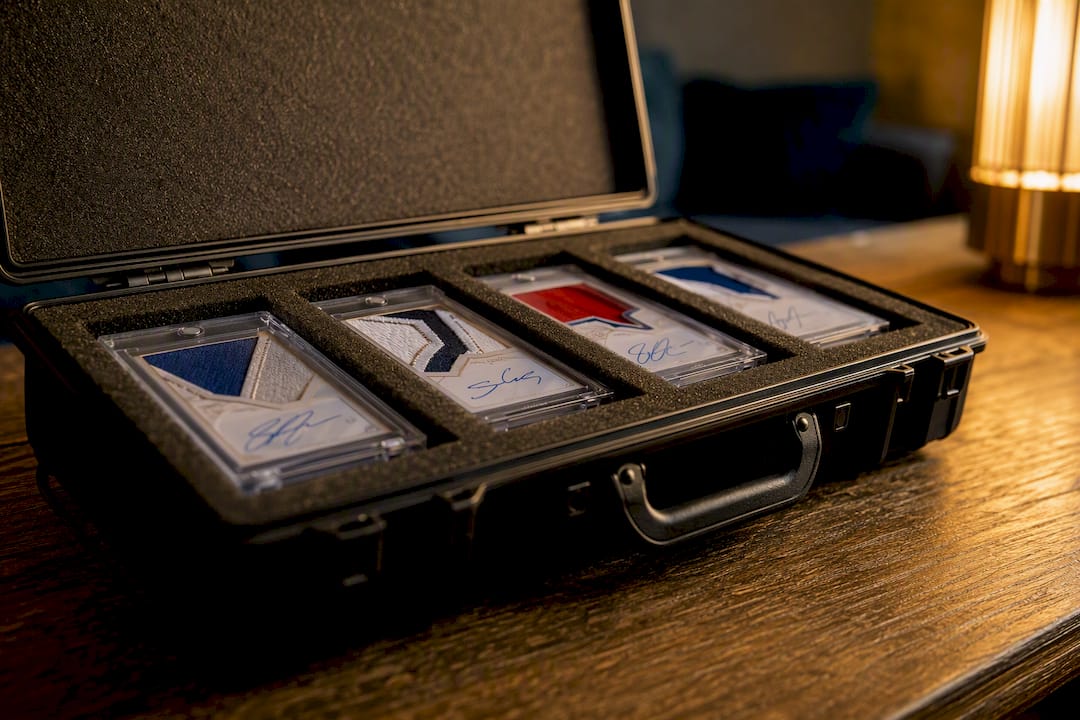
Superfractors, rookie patch autographs, and Tier One numbered autograph patches are where the record sales happen. These cards are not liquid. You might wait months for the right buyer. But they carry the ceiling: the $52,800 Bowman Chrome Draft Superfractor and the $45,600 Anime Superfractor both came from this tier. Buyers here should expect to hold, not flip, and should budget for authentication and insured shipping on any purchase above a few thousand dollars.
Why Does Misiorowski’s Card Market Behave Differently?
Misiorowski’s cards don’t follow the same pricing logic as a typical top prospect, and that’s largely a population story. His 1st Bowman Chrome autograph has a reported PSA 10 population of roughly 79 copies, a fraction of what some higher-profile rookies carry in the same slot. Lower population combined with strong on-field performance is the exact setup that produces asymmetric upside in the hobby: demand grows faster than supply can answer it.
A few market signals worth watching:
- Auction results above $40,000 for 1/1 parallels confirm real collector demand exists at the top of the market, not just speculative chatter.
- Low pop counts paired with rookie-season performance tend to compress the gap between a “star power” prospect and a “scarcity” prospect.
- Headline 1/1 sales are not the same as liquidity. A $45,600 sale proves a ceiling exists; it doesn’t mean the next 1/1 sells that fast.
- Serial-numbered refractors, because they trade more frequently, tend to offer steadier, more predictable pricing than one-of-ones.
How Do You Buy and Grade Misiorowski Cards Safely?
Buying a rookie card in an active, developing market means doing a little homework before you click “buy.” The steps below apply whether you’re spending $20 or $20,000.
- Verify the seller. Check feedback history, look for prior sales of graded sports cards specifically, and avoid brand-new accounts on high-value lots.
- Request slab photos with visible serials. For any numbered or graded card, ask for a clear shot of the certification number and cross-check it on PSA’s or BGS’s public lookup tool.
- Ask for provenance on high-end lots. Anything approaching four figures should come with a sale history or auction record.
- Decide raw versus slabbed based on tier. Entry-level base and refractor cards rarely justify grading fees. Autographs and numbered parallels usually do, since a PSA 9 or 10 label materially widens the buyer pool.
- Track release-week pricing. New product tends to spike, then settle within a few weeks. Watching eBay solds and a price tracker like GoCollect, CovrPrice, or GPAnalysis helps you avoid buying at the top.
Pro Tip: Don’t assume a numeric grade is mandatory for value. Some elite one-of-ones sell without a numeric slab at all. The $45,600 Anime Superfractor sale went through as CGC Authentic, non-numeric, because provenance and rarity carried the transaction, not a grade label.
Where NextGenCards Fits Into the Misiorowski Market
Nextgencards specializes in exactly the category this guide covers: rare rookie autographs, patch cards, and physical redemption cards for collectors who want verified inventory rather than a gamble on an anonymous seller. The shop’s catalog includes Misiorowski autograph rookies at multiple price points, including a Topps Series 1 autograph rookie and a Topps Chrome autograph rookie, both relevant to the mid-range tier discussed above.
For collectors chasing the high-end tier, Nextgencards also lists a 1991 Topps design autograph rookie, a rare redemption format that appeals to collectors who like retro-designed inserts on modern prospects.
- Curated focus on rookie autographs, patches, and redemption cards rather than a generic bulk catalog.
- Free shipping on select items, which matters more than it sounds once you factor insured shipping costs on high-value cards.
- A browsable rookie autographs and relics collection for readers who want to compare options before buying.
How Does Misiorowski Compare to Other 2026 Pitching Prospects?
Misiorowski isn’t the only arm generating hobby buzz in 2026, and comparing his cards to peers helps put his pricing in context. JJ Wetherholt, a top-tier prospect with his own Bowman Green Chrome signature rookie, represents a similar scarcity play at a lower current price point, since his major league track record is thinner.
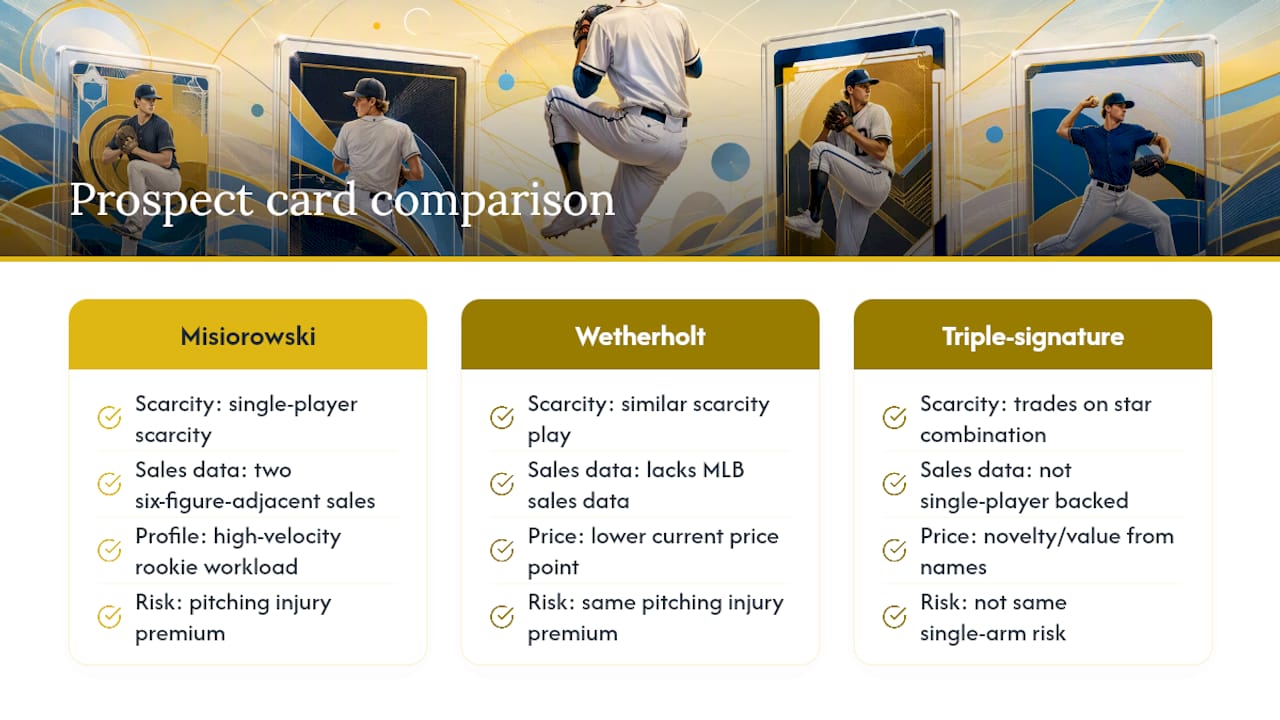
Where Misiorowski separates himself is the combination of a distinctive high-velocity profile and a rookie-season workload that’s already produced real sales data, unlike prospects still waiting on their first call-up. That’s a meaningful difference for anyone weighing relative investment value: a card backed by two confirmed six-figure-adjacent sales carries a different risk profile than a card backed purely on prospect pedigree.
Compare that to triple-signature novelty cards like the Skenes, Cole, and Strasburg triple autograph, which trades on star combination rather than single-player scarcity. Position matters too. Pitching prospects carry an inherent injury premium that position-player prospects like Junior Caminero or Elly De La Cruz don’t face in the same way, since an arm injury can derail a career trajectory overnight. That risk is baked into every pitching prospect’s card, Misiorowski included, and it’s worth weighing against the upside before committing serious money to any single high-end lot.
What Will Move Misiorowski Card Values in 2026?
Card values in this market are being shaped by a handful of factors, and none of them are guaranteed to point in one direction. His on-field performance is the biggest lever. Continued strikeout production and health will do more for demand than any single card release.
Set releases themselves matter too. Each new Topps or Bowman product that includes his autograph adds supply, which can soften short-term pricing on comparable prior-year cards even while overall interest in the player grows. Population reports are the other major factor. As more copies get submitted for grading, PSA 10 pop counts on cards like his 1st Bowman Chrome autograph will likely rise from the current low figure, which could soften the scarcity premium that’s currently supporting mid-range prices.
External hobby conditions play a role as well. Broader sports card market liquidity, interest rate conditions affecting discretionary spending, and general MLB rookie class hype all shift how aggressively collectors bid on any given prospect. None of these factors move in isolation, and no combination of them guarantees future price direction. Anyone buying with an eye toward resale should treat pop counts, performance, and market tracking data as informative, not predictive.
Should You Buy for the Long Haul or the Next Flip?
Liquidity and headline price are two different conversations, and mixing them up is the most common mistake new collectors make. A $45,600 Superfractor sale tells you the ceiling exists. It does not tell you how fast the next comparable card will sell, or at what price.
If your goal is a quick resale, numbered Purple and Green refractor parallels and mid-range autographs are the better fit. They trade with enough frequency that you can reasonably estimate a sale window and price based on recent comps from trackers like Clector or Sports Card Investor. If your goal is a long-term hold on a card with real upside, the 1/1s and patch autographs are where that upside concentrates, but you should expect to hold for an extended period and accept that a buyer at your target price may not appear quickly.
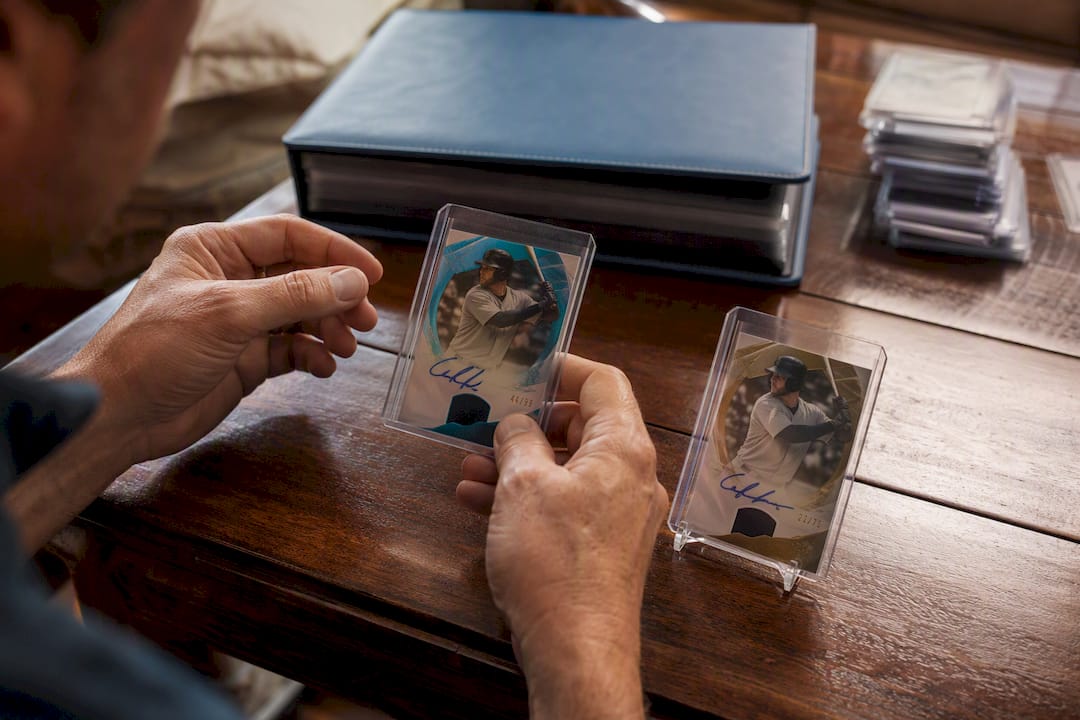
The safest middle ground, and the one most collectors underuse, is splitting a budget across both. A base of steadier, numbered parallels with a small allocation toward one higher-ceiling chase card gives you exposure to both outcomes without betting everything on a single illiquid asset.
What This Market Actually Rewards
The conventional advice in this hobby says chase the biggest name and the rarest parallel, full stop. That advice is incomplete. What the sales data on Misiorowski actually shows is that scarcity without context is meaningless. A low pop count matters because it’s paired with a performance narrative that’s already generating real buyer interest, not because rarity alone guarantees a payoff.
Where I think collectors get this wrong is treating the $52,800 and $45,600 sales as a baseline rather than as outliers at the extreme top of a thin market. Those numbers prove demand exists. They don’t prove the next 1/1 sells for anywhere close to that, and anyone budgeting around headline prices instead of the steadier mid-range comps is setting themselves up for disappointment.
If you’re prioritizing anything first, prioritize liquidity data over rarity claims. Check the actual pop count, check recent solds, and only then decide whether a card’s scarcity story justifies the premium being asked. That discipline separates collectors who build lasting value from those chasing a number they saw in a headline.
— Richard
Get Your Next Misiorowski Card From a Dedicated Rookie Card Shop
Nextgencards gives you what a random marketplace listing can’t: a catalog built specifically around rare rookie autographs and redemption cards, so you’re not sorting through thousands of unrelated listings to find a verified Misiorowski autograph.
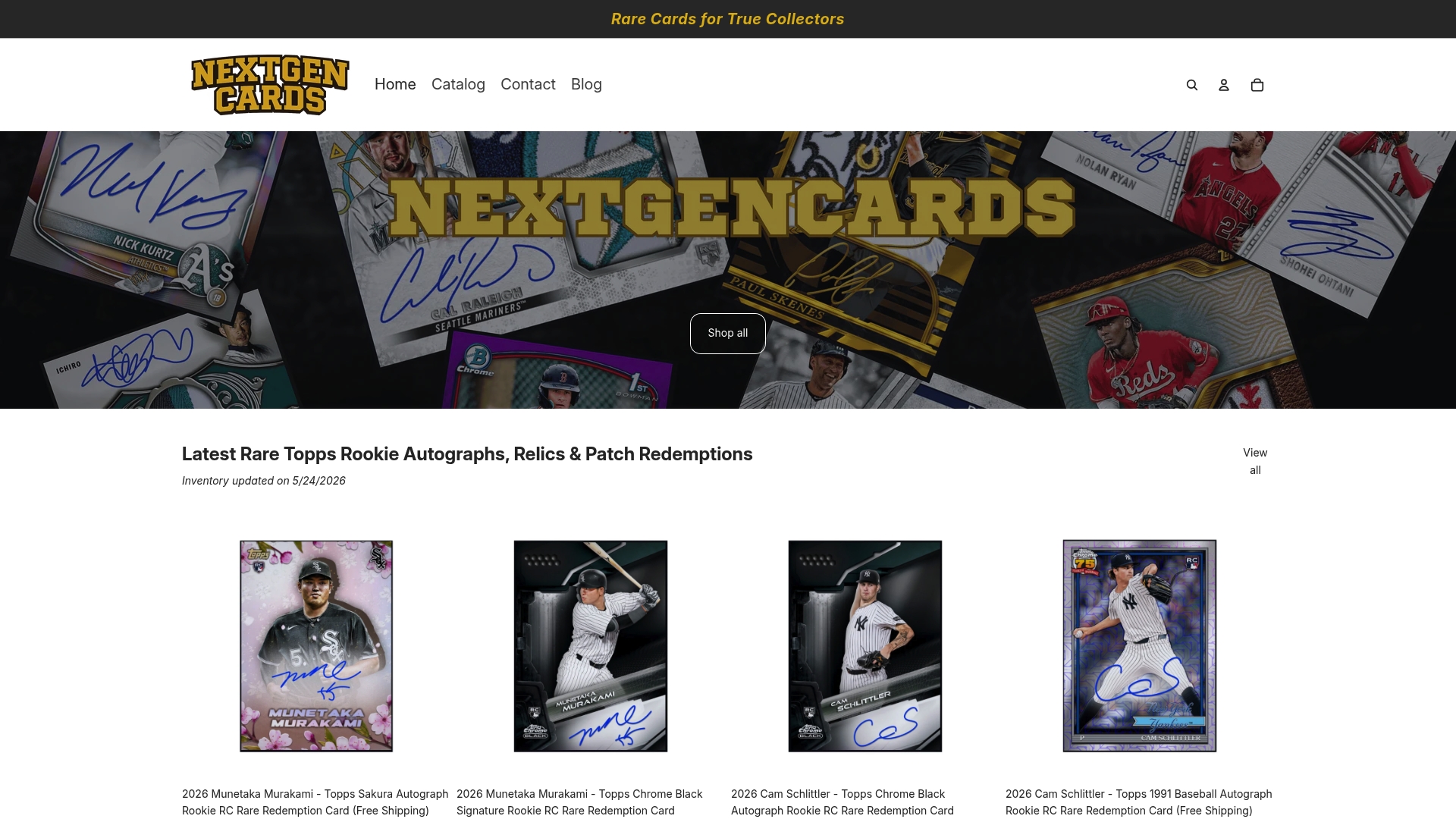
The shop’s current lineup includes the 2026 Jacob Misiorowski Topps All Star Game autograph rookie for collectors targeting the high-end tier, alongside comparable prospect autographs like the JJ Wetherholt Bowman Green Chrome signature rookie if you’re diversifying across the 2026 pitching class. Free shipping applies on select items, and every listing includes the card details you need to check pop counts and parallel type before you buy.
Browse the Misiorowski autograph rookie listings now to see what’s currently in stock at your target budget tier.
Sources
- Strikeouts vs. Starpower: The Paul Skenes and Jacob Misiorowski card market difference | Yahoo Sports
- Jacob Misiorowski card checklist & comps | AgentGrail
- Jacob Misiorowski 2026 Bowman #35 Base Price Guide | Sports Card Investor
FAQ
What Is the Best Jacob Misiorowski Rookie Card?
For most collectors, the best pick depends on budget: Topps Series 1 or Topps Chrome base cards for beginners, a 1st Bowman Chrome autograph for mid-range value, and a 1/1 Superfractor for collectors chasing the highest recorded sales.
What Rookie Cards Should You Look for in 2026?
Beyond Misiorowski, 2026 collectors are watching rookie autographs and numbered parallels from other top pitching prospects and position players in the same release cycle, since comparing pop counts and price bands across multiple prospects helps calibrate relative value.
What Is Jacob Misiorowski’s Rookie Card Worth?
Values vary enormously by set and condition. AgentGrail’s tracking shows raw copies averaging around $52 and PSA 10 graded copies closer to $300, while rare 1/1 Superfractors have sold for $52,800 and $45,600 at auction.
What Are the Hottest 2026 Baseball Cards?
Rookie autographs from Misiorowski, Wetherholt, and other top prospects are drawing heavy hobby attention this year, driven largely by low population counts on early autograph parallels paired with strong early performance.
Where Can You Buy Misiorowski Cards Safely?
Verified sellers with clear slab photos, confirmed serial numbers, and sale history are the safest route. Nextgencards lists Misiorowski autograph rookies directly, giving buyers a checked source instead of an anonymous marketplace listing.
Recommended
- 2026 Jacob Misiorowski 1991 Topps Baseball Autograph Rookie RC Rare Card – Next Gen Cards LLC
- 2026 Jacob Misiorowski 1991 Topps Baseball Jersey Patch Rookie RC Rare Card – Next Gen Cards LLC
- 2026 Jacob Misiorowski Topps Heritage Autograph Rookie RC Rare 195 CC Limited Release Card – Next Gen Cards LLC
- 2026 Jacob Misiorowski Topps Tier One Autograph Rookie RC Rare Card – Next Gen Cards LLC
0 comments