

A card collector store carries raw singles, graded slabs, sealed hobby product, and increasingly, rare redemption and autograph cards for sports and trading card games alike. The fastest next step is to search a dealer locator by city, state, or ZIP, then confirm hours and stock directly with the shop, or browse a curated online specialist’s listings for rare redemptions and autographs before you buy.
TL;DR:
- Use a dealer locator by city, state, or ZIP, then check the shop’s current hours and call about the exact card or set before visiting.
- Compare completed sales, matching raw cards with raw and graded cards with graded; asking prices often exceed actual sale prices.
- Before paying a premium, inspect both sides under good light and request a slab’s certification number, provenance, or prior sales history.
- Redemption cards represent items still being produced, so fulfillment can take longer than for in stock products; ask sellers about processing and shipping timelines.
Table of Contents
- What to expect in a card collector store
- How to find and verify a trustworthy card collector store
- Practical checklist for buying, selling, or trading in person
- Why a curated online catalog works for rare redemptions and autographs
- Pricing guide for high-value rookie autographs, relics, and redemptions
- What to expect from order to delivery when buying online
- Tips for negotiating price and securing exclusive cards
- How to spot counterfeit or altered cards in a store setting
- Why focused catalogs help serious collectors
- How NextGenCards helps collectors find rare redemption and autograph cards
- FAQ
- Sources
What to expect in a card collector store
Inventory varies from shop to shop, but most card collector stores organize their stock into a few recognizable categories. Knowing these ahead of time helps you figure out whether a particular shop is worth the trip.
- Raw singles and graded slabs, sold separately and priced differently even for the same card
- Rookie cards, autographs, and patch or relic cards featuring game-worn memorabilia
- Redemption cards, which represent a physical placeholder for an autograph or memorabilia card still being produced
- Sealed hobby boxes, blasters, and other unopened product for collectors who prefer to open their own packs
- Collector supplies like sleeves, toploaders, and storage boxes
Beyond inventory, many shops offer services that extend their value past simple retail. Some buy full collections outright, host trade nights, submit cards for grading on a customer’s behalf, or run organized play events and tournaments for trading card games.
Specialty matters here. A shop built around vintage baseball may carry almost nothing for Pokémon or Magic: The Gathering, and a store known for modern football rookies might not stock much basketball at all. Before planning a visit around a specific player, set, or game, confirm availability directly with the store’s grading and authentication services or inventory listings.
How to find and verify a trustworthy card collector store
Locating a shop is only half the job. Confirming it actually has what you want, and that it operates the way you expect, saves you a wasted trip.
- Start with a dealer locator or directory and filter by city, state, or ZIP code, along with specialty if the tool allows it.
- Visit the shop’s website or social feed to check current hours, posted stock, and any upcoming events, since store hours listed on a locator can go stale.
- Call ahead and ask directly whether they carry the category you want, whether that’s modern rookie autographs, vintage sports singles, redemption cards, or a specific trading card game.
- Ask about event or tournament schedules if organized play matters to you. Official resources like tournament location listings can help confirm whether a shop hosts regular events for a particular game.
- Look for posted buying policies and recent social media activity, both of which signal whether a shop is actively trading and restocking.
Shops that post regularly about new arrivals, trade nights, or tournament results tend to have fresher inventory than ones with stale or inactive pages. A store that hasn’t updated its social feed in months is worth a phone call before you drive out.
Pro Tip: Call or message the shop with the exact card or set you’re hunting before you visit. A quick question saves a wasted trip if the item sold or was never stocked.
The practical sequence is simple: locator, then website or social feed, then phone call, then visit. Skipping steps usually means showing up to find the shelf empty or the shop closed for an event you didn’t know about.
Practical checklist for buying, selling, or trading in person
Whether you’re buying, selling, or trading, a short in-store checklist keeps you from overpaying or underselling.
- Inspect centering, corners, edges, and surface under good lighting, and ask to view both sides of the card before agreeing to a price
- Compare the card against recent completed sales when possible, since price comparisons only work when you match raw against raw or graded against graded
- For graded cards, check the slab label and certification number, remembering that authentication is confirmed before a numerical grade is ever assigned
- Sort cards you’re selling into raw, graded, sealed, and memorabilia categories, and bring clear photos or a written list to speed up the conversation
- Ask whether an offer is cash or store credit, and what comparable sales the shop is using to justify its number
For high-value purchases, especially rare redemptions or multi-player autograph cards, ask for provenance or prior sales history before paying a premium. A shop that can’t explain how it arrived at a price, or won’t show you the certification number on a slab, is one to be cautious with. Grading services examine a card for centering, corners, edges, and surface condition only after confirming the card itself is genuine and unaltered, which is why a graded slab carries more weight than a seller’s word alone.
Why a curated online catalog works for rare redemptions and autographs
Local shops are great for browsing and trades, but their stock of rare redemption and autograph cards can be inconsistent week to week. A curated online specialist fills that gap by keeping listings centralized and updated specifically for collectors chasing scarce items.
The guide recommends checking inventory and stock verification directly with a seller before committing to a purchase, which is exactly the model a curated catalog is built to support: clear listings, consistent categories, and direct contact when you have authentication questions.
Our own catalog at NextGenCards focuses on exactly this niche. Current listings include:
- Junior Caminero Topps Bowman Chrome Green Signature Rookie RC Rare Redemption Card, which ships free
- Jacob Misiorowski Topps All Star Game Autograph Rookie RC Rare Redemption Card, also with free shipping
- Jacob Misiorowski Topps Baseball Autograph Rookie RC Rare Redemption Card, a throwback design paired with a modern autograph
- Skenes Cole Strasburg Topps Baseball Stars Triple Autograph Rare Physical Redemption Card, a three-player redemption for collectors chasing multi-signature pieces
- Jalen Brunson Topps All Star Game Jersey Patch Autograph Rare Redemption Card and the companion Topps Full Court Jersey Patch Autograph Rare Redemption Card
- Jadarian Price Topps Flagship Football Autograph Rookie RC Rare Redemption Card, free shipping included
- Fernando Mendoza Topps Signature Series Silver Autograph Rookie RC Rare Redemption Card, also free to ship
Check the product page for details before checkout.
Pricing guide for high-value rookie autographs, relics, and redemptions
There’s no single “fair price” for a rare card. Player, set, parallel, serial numbering, grade, eye appeal, and current demand all move the number, sometimes by a wide margin for the same card in different condition. A raw rookie autograph and the identical card sealed in a graded slab can sell for very different amounts even on the same day.
Redemption cards add another layer, since you’re often paying for a confirmed autograph or memorabilia card that hasn’t physically arrived yet. Multi-player redemptions, like a triple-autograph card featuring several athletes, typically command more than single-signature pieces simply because they combine multiple names and more limited print runs into one object.

When comparing prices across shops or listings, always match raw against raw and graded against graded. Comparing a raw card’s asking price against a graded sale of the same card will make the raw card look overpriced or underpriced when the real difference is simply the grading status, not the card itself.
Patch and relic cards introduce yet another variable: the size, color, and visual appeal of the swatch itself affects price independent of the player or set. Two copies of the same patch card can differ in value based on how much of a team logo or color pattern the swatch shows. Serious collectors track completed sales rather than asking prices, since asking prices on marketplaces often run higher than what a card actually sells for.
What to expect from order to delivery when buying online
Buying a rare card online follows a fairly predictable sequence, even though exact timing depends on the seller. Once you place an order, online specialists’ processing times vary, especially for items already in stock rather than true redemption cards awaiting physical fulfillment.
Shipping options typically range from standard ground service to faster expedited tiers, and several listings in our own catalog include free shipping as a built in benefit rather than an add on cost. Redemption cards carry one extra wrinkle: the card you’re buying may represent a confirmed slot for an autograph or memorabilia card still being manufactured, which can extend the timeline beyond a typical in stock item.
Before paying a premium for any high value card, whether in person or online, ask the seller directly about current processing times and what shipping method applies to your specific order. A seller who can answer clearly, and who shows authentication notes directly on the product page, is giving you the kind of transparency that protects your purchase. Tracking information should arrive once the order ships, and a reputable seller will respond quickly if you have questions about delivery status before the card arrives.
Tips for negotiating price and securing exclusive cards
Negotiating in person works differently than negotiating online, but a few habits help in both settings. Walking in with recent completed sales data gives you a concrete number to reference rather than an opinion about what a card “should” cost.
For limited or exclusive cards, speed often matters more than negotiation. Redemption cards, low serial numbered parallels, and first run rookie autographs tend to move fast once listed, so following a shop’s social feed or signing up for restock alerts puts you ahead of other buyers. Asking a shop directly whether they expect more of a particular redemption or parallel to arrive can also reveal whether it’s worth waiting or buying now.
When negotiating price on a graded card, the certification number and grade are not up for debate, but the price relative to recent sales often is. Bringing a specific comparable sale to the conversation, rather than a general sense that the price feels high, tends to get a more productive response from a seller. For raw cards, condition disagreements are common, so asking to inspect centering and corners together before discussing price keeps the conversation grounded in something both sides can see.
Online, securing an exclusive card often comes down to acting quickly once a rare redemption or autograph listing goes live, since curated inventory in this category tends to sell faster than general sports card stock.
How to spot counterfeit or altered cards in a store setting
Altered cards show up more often than most new collectors expect, and the most common issues are trimming, recoloring, and resurfacing, all done to make a lower grade card look better than it is. A trained eye checks for inconsistent corner sharpness, edges that look too clean relative to the card’s age, or surface gloss that doesn’t match the rest of the card.
Authentication happens before grading for exactly this reason: a grading service first confirms a card is genuine and unaltered, then assigns a condition score. That sequence matters when you’re buying in a store, since a slab with a visible certification number has already passed that authenticity check, while a raw card has not.
For raw cards, comparing the card against known authentic images of the same card and set can reveal inconsistencies in print quality, centering patterns, or stock thickness. Counterfeit cards often use slightly different cardstock or print registration than the genuine product, which becomes more obvious once you’ve handled a few authentic examples of the same set.
If a shop can’t explain why a high value card doesn’t have a certification number, or seems reluctant to let you inspect it closely under good lighting, that reluctance is itself useful information. Reputable shops expect scrutiny on expensive cards and generally welcome the chance to show provenance or sales history that backs up their asking price.

Why focused catalogs help serious collectors
A shop that tries to carry everything often carries very little of what a serious collector actually wants. Narrowing a catalog to rookie autographs, patch and relic cards, and redemption cards cuts down the search time for a collector who already knows the category they’re after.
That focus doesn’t replace what local shops do well. Trade nights, community events, and the chance to physically inspect a card before buying are advantages no online listing fully replicates. What a curated catalog adds is consistency: the same categories, updated regularly, without the week to week variability a general shop’s inventory tends to have.
Pro Tip: Ask for the certification number and any provenance documentation before paying a premium on a high value card, whether you’re buying in a shop or from an online listing.
— Richard
How NextGenCards helps collectors find rare redemption and autograph cards
We built our catalog around the categories that give collectors the most trouble finding consistently: rookie autographs, patch and relic cards, and physical redemption cards across MLB, NBA, and NFL. Product pages show the details available for each listing so you can review them before checkout.
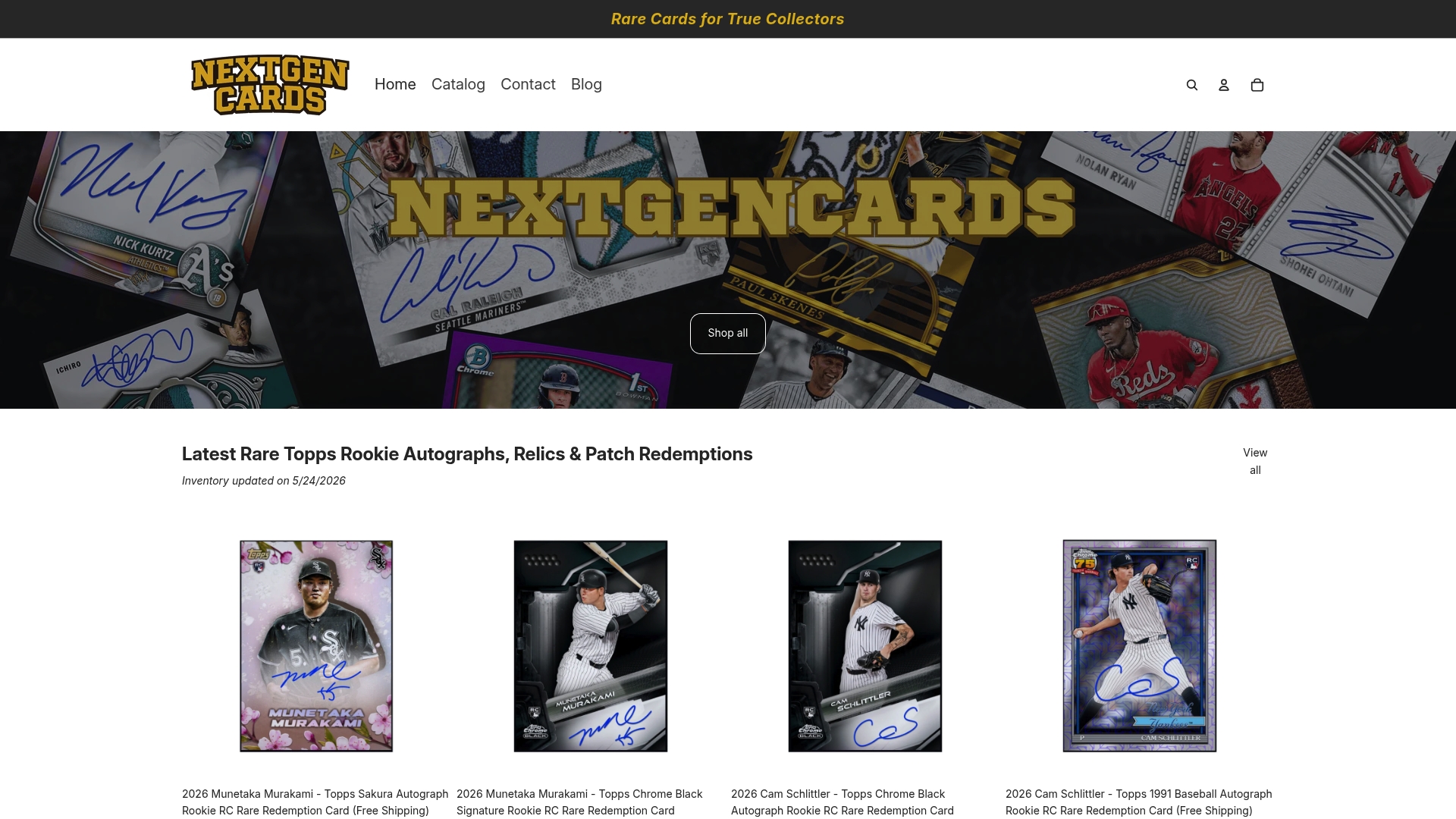
Browsing our catalog works the same way a specialty shop would, just without the drive. You can reach out with questions about a specific certification or shipping timeline before you commit to a purchase.
- Browse our full redemption card collection across MLB, NBA, and NFL
- Check the Skenes Cole Strasburg Triple Autograph Redemption for a multi-player option
- Review the full product catalog to compare current listings by sport and player
If a specific card isn’t listed yet, reaching out directly is the fastest way to ask about upcoming inventory. Start browsing at NextGenCards and check a listing’s shipping and authentication details before you buy.
FAQ
What’s the difference between a raw card and a graded card?
A raw card has never been submitted for professional grading, while a graded card sits sealed in a slab with a certification number and a condition score, typically on a 1 to 10 scale from PSA. Graders authenticate the card first, then assess centering, corners, edges, and surface before assigning a grade.
How do redemption cards work?
A redemption card is a physical placeholder representing a confirmed autograph or memorabilia card that hasn’t been manufactured yet. Once the actual card is produced, the manufacturer typically mails it to whoever holds the redemption, which can take weeks depending on production timelines.
How can I find a card collector store near me?
Search a dealer locator by city, state, or ZIP code, then check the shop’s own website or social feed for current hours and stock before visiting. A quick phone call confirming whether they carry the specific category you want saves a wasted trip.
Does NextGenCards offer free shipping?
Shipping terms may vary by listing. Check the details on each product page to see whether a specific card qualifies for free shipping. Checking the listing before checkout confirms whether a specific card qualifies.
How do I know if a card has been altered or counterfeited?
Look for inconsistent corner sharpness, edges that seem too clean for the card’s age, or surface gloss that doesn’t match the rest of the card, since these often indicate trimming or recoloring. A grading service checks authenticity before assigning any condition grade, which is why a certified slab carries more weight than a seller’s claim alone.
Sources
Recommended
- Why Collectors Want This 2026 Cooper Flagg Topps Flagship Rookie Jersey Patch Rare RC Redemption Card
- Collectors’ 5 Step Check for Ohtani Rookie Auto Redemptions
- Curator First: Best Sports Card Sites for Rookies, Autos & Redemptions
- Collector Tips: Exploring the 2025 Cam Schlittler Topps Series 1 Autograph Rookie RC Rare Redemption Card
0 comments