

The best Konnor Griffin cards to target are his 2024 Bowman Chrome Prospect Autograph 1st variations, followed by the numbered Bowman Chrome parallels, with the plain 2024 Bowman Draft paper rookie as the accessible entry point. For most budgets, the base 2024 Bowman Chrome Prospect Autograph offers the strongest mix of authenticity, liquidity, and long-term upside. High-dollar collectors should watch numbered Red and Black parallels, since those combine the 1st Bowman tag with real scarcity.
TL;DR:
- The most valuable Griffin cards are his numbered Bowman Chrome parallels, especially the Red and Black autograph versions, which sold for up to $40,000.
- The 2024 Bowman Draft paper rookie is the most accessible entry point and offers moderate appreciation, while the Chrome and autographed versions are suited for more serious investors.
- Population data shows that many high-end parallels are more abundant than perceived, making scarcity and perfect grading critical for maximizing value.
- Price tiers range from under $50 for raw rookies to over $5,000 for rare parallels, with patience needed for long-term appreciation on high-value, low-population cards.
- Buying from reputable sources with verified certification and clear return policies is essential to avoid counterfeits and ensure long-term value.
Table of Contents
- Best Konnor Griffin Cards for Collectors and Investors
- What Price Tiers Should Guide Your Buying Decisions?
- How Volatile Is the Konnor Griffin Card Market?
- How Do PSA Populations Affect Grading and Buying Decisions?
- Beyond the Grade: What Else Determines Condition?
- How Can You Spot a Fake or Altered Griffin Card?
- Which Sellers and Platforms Offer Real Buyer Protection?
- What Should You Ask a Seller Before You Buy?
- Our Take: Buy the Auto, Not the Hype
- Where to Buy Authenticated Konnor Griffin and Rookie Cards
- Sources
- FAQ
Best Konnor Griffin Cards for Collectors and Investors
Griffin’s card market splits cleanly into three tiers: the mass-produced paper rookie, the Chrome autograph line, and the ultra-scarce numbered parallels and inserts that generate the headline sales. Understanding where each card sits determines whether you’re buying a collectible or a speculative asset.
- 2024 Bowman Draft paper rookie (#BD-22). This is Griffin’s most accessible card and the one most collectors own first. It carries the coveted “1st Bowman” designation but lacks an autograph or chrome finish, so pricing stays modest even in top grades.
- 2024 Bowman Chrome (#BDC-22). The chrome version of the same image, prized for its refractor finish and typically priced well above the paper version in equivalent grades.
- 2024 Bowman Chrome Prospect Autographs (#CPA-KG). This is the card most serious buyers mean when they say “Griffin’s first Bowman auto.” It pairs the rookie logo with an on-card signature, and it anchors the entire market for his cards.
- Numbered parallels of the Chrome Autograph including Orange (/25), Red (/5), and Black (/10) versions. These are where the real money moves. A PSA 10 2024 Bowman Chrome Draft Autographs Red X-Fractor numbered to five copies sold for $40,000 on the exact date of Griffin’s MLB debut, a sale that still anchors most price guides for the ultra-rare end of his checklist.
- Bowman Sapphire and Superfractor editions, along with select 2025 and 2026 insert autographs, round out the high-end market. These pieces trade less frequently and depend heavily on auction timing rather than steady demand.
Sports Illustrated’s analysis of the Griffin market makes a point worth repeating: the 1st Bowman logo functions as the single most important long-term liquidity driver for a modern prospect, often mattering more to resale value than a later, flashier autograph release. That’s why the Chrome Prospect Autograph outperforms newer insert autos that lack the 1st Bowman tag, even when those inserts look more visually striking.
Population and pricing data from CardLines shows the spread clearly. The paper #BD-22 in PSA 10 typically trades around $200 to $225, while Bowman Chrome versions run higher, and Chrome autograph parallels stretch into the low thousands depending on the specific numbering. SportsCardInvestor tracks population data showing roughly 552 PSA 10 copies exist for certain Bowman Chrome 1st Auto variants, which gives investors a real supply benchmark rather than a guess.
For investor fit: the paper rookie suits anyone building a Griffin collection cheaply with strong liquidity but limited upside. The Chrome autograph balances risk and reward for most portfolios. The numbered parallels are for buyers who can absorb volatility and want exposure to the ceiling of Griffin’s market, not the floor.
What Price Tiers Should Guide Your Buying Decisions?
Griffin’s card values break into four rough bands, and knowing which tier a card belongs to keeps you from overpaying for hype or underestimating a genuine grail.
- Entry tier (under $50). Raw or lower-graded paper Bowman rookies fall here. Expect wide availability and fast resale, but minimal appreciation potential.
- Collectible tier ($50 to $500). PSA 10 paper rookies and raw or mid-graded Bowman Chrome base cards sit in this range. These move steadily and make sense for collectors who want a real piece of Griffin’s rookie class without a big commitment.
- Investment tier ($500 to $5,000). This is where the Bowman Chrome Prospect Autograph lives, especially in PSA 10 or with a mid-size numbered parallel like the Orange /25. Grading matters enormously here since a PSA 10 can command multiples of a PSA 9 for the same card.
- Grail tier ($5,000 and up). Red /5, Black /10, Superfractors, and rare inserts occupy this space. The $40,000 Red X-Fractor sale is the ceiling example, but most grail-tier trades land well below that outlier.
Grading is the biggest lever between tiers. A raw Chrome autograph might sell for a fraction of its PSA 10 counterpart, since buyers in this hobby pay a real premium for certainty. Entry and collectible tier cards suit short holding periods and quick flips. Investment and grail tier cards reward patience, typically a 24 to 36 month horizon, since their buyer pool is thinner and prices need auction attention to peak.
How Volatile Is the Konnor Griffin Card Market?
Prospect cards move in bursts, not straight lines, and Griffin’s market is a clean example. Collectors often mistake short-term hype for long-term value, and SI’s coverage of the Griffin versus Bobby Witt Jr. comparison points out that prospect-driven demand creates sharper spikes and steeper corrections than established veteran markets.
Three events typically trigger price jumps: a prospect’s MLB debut, a hot stretch of minor league or big league performance, and a high-profile auction that draws bidder attention beyond the usual buyer pool. The $40,000 Red X-Fractor sale landed on debut day specifically because attention was at its peak.
A practical 24 to 36 month playbook looks like this:
- Buy Chrome autograph base and mid-tier numbered parallels early, before a debut or breakout stretch drives prices up.
- Stage purchases across grades rather than committing everything to one card. A PSA 9 today and a PSA 10 later spreads your risk if population reports shift.
- Set a selling trigger tied to performance milestones, not just price charts. A strong rookie season often moves prices more than any single auction result.
- Watch for red flags like sudden population spikes on a previously scarce parallel or a wave of similar cards hitting auction at once.
Pro Tip: Buying one PSA 9 and one raw copy of the same card, instead of two PSA 10s, gives you exposure at two price points and a hedge if grading standards or population counts shift before you sell.
How Do PSA Populations Affect Grading and Buying Decisions?
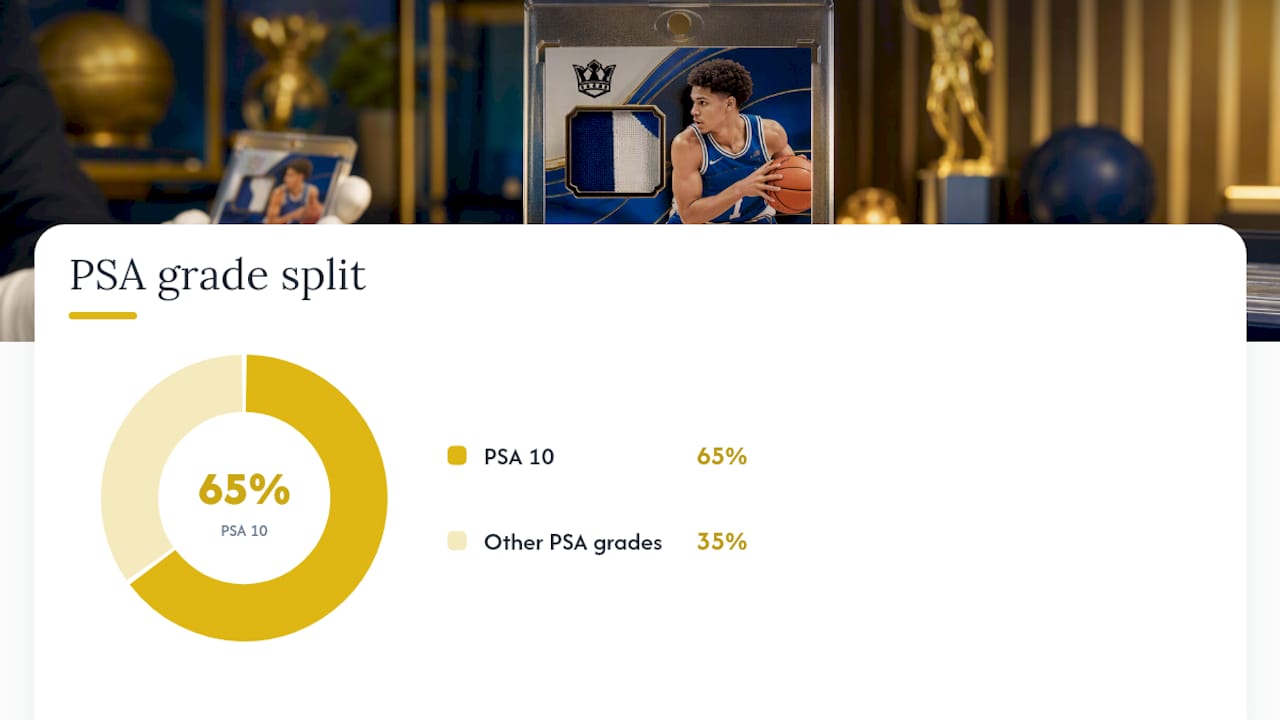
Population reports tell you how much supply exists at each grade, and that number should shape whether you buy raw or graded. A card with a thin PSA 10 population commands a real premium; a card where PSA 10s are common does not, no matter how good it looks in hand.
The paper 2024 Bowman Draft #BD-22 illustrates this well. It has been graded more than 1,200 times with roughly 65% landing in PSA 10, which tells you the card grades easily and PSA 10 copies aren’t especially scarce. That tempers any scarcity premium, unlike chromium parallels where Gem Mint hit rates run lower.
Statistic Callout: Certain 2024 Bowman Chrome Prospect Auto 1st variants show a PSA 10 population near 552 copies, giving buyers a concrete benchmark for whether a listed price reflects real scarcity or inflated hype.
Buy raw when you want liquidity and plan to flip quickly; buy graded when you want a value play tied to a specific population tier. Before buying, check:
- Seller feedback history and whether they specialize in graded sports cards.
- The PSA or BGS certification number against the official population report.
- Provenance, meaning whether the card’s sale history matches known auction logs rather than an unverifiable private claim.
- Beckett’s own reporting cautions that aggregated “top sale” lists can blend multiple sale types, so always check the raw auction record before assuming a listed price is typical.
Beyond the Grade: What Else Determines Condition?
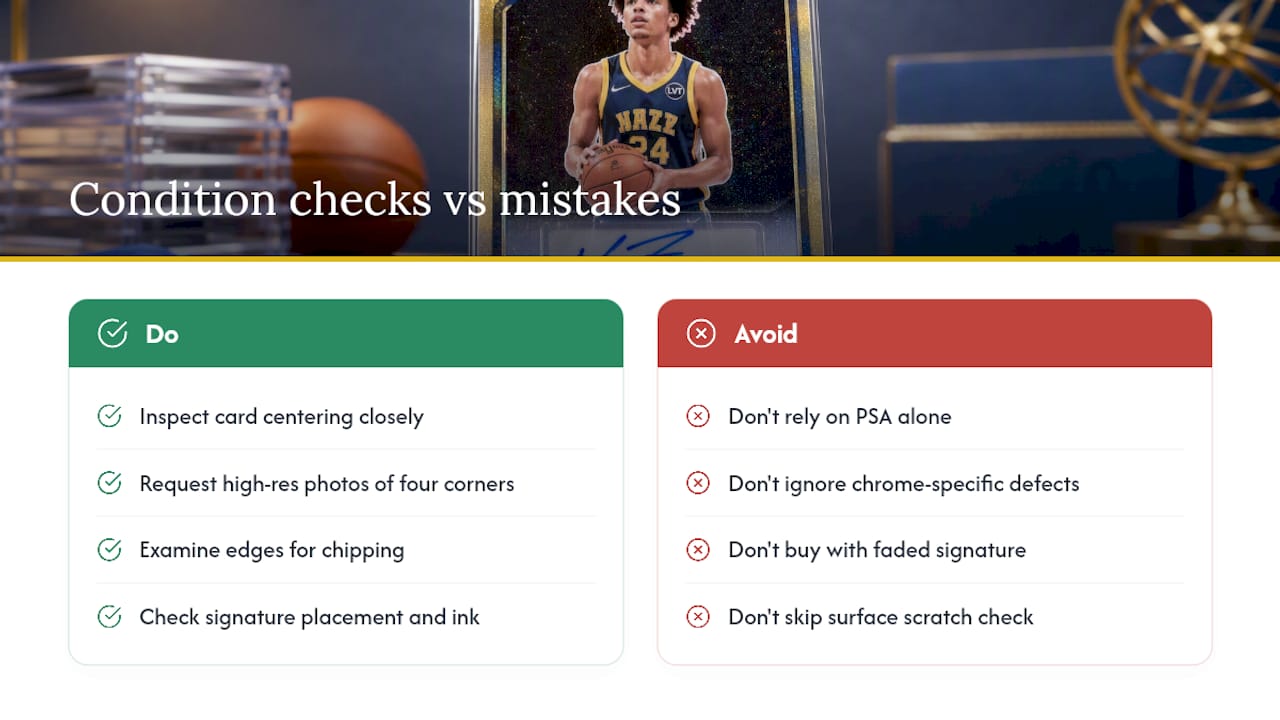
A PSA 10 label tells you a card graded well, but it doesn’t tell you everything a sharp-eyed collector should check before paying a premium. Centering is the most common issue on Bowman Chrome products specifically, since the chrome printing process is less forgiving than standard cardstock. A card can grade a 10 with centering that’s technically within tolerance but still looks visibly off to the naked eye.
Edges and corners matter just as much on autograph cards, since the on-card signature draws your eye away from the borders. Chipping along the edges is common on chrome stock because the surface is more brittle than traditional cardboard. Surface quality, meaning scratches, print lines, or the wave-like distortion sometimes called “chrome wave,” can also drag down eye appeal even within a single numeric grade.
For autograph cards specifically, signature placement and ink quality deserve a second look. A faded or off-center signature on an otherwise gem-quality card affects resale value in ways a PSA grade alone won’t capture. When you’re comparing two PSA 10 copies of the same numbered parallel, always ask for high-resolution photos of all four corners and the signature area before paying a premium price. The grade gets you in the door; the details determine whether you overpaid.
How Can You Spot a Fake or Altered Griffin Card?
Counterfeits and altered cards show up most often on the highest-value parallels, since that’s where the payoff justifies the effort for a scammer. The clearest defense is buying only cards that arrive already graded by PSA or BGS, since both companies authenticate before they grade and their slabs carry verifiable certification numbers.
If you’re buying raw, inspect the card’s surface under strong light for signs of trimming, which shows up as slightly uneven borders or a card that fits a sleeve too tightly. Reprinted or altered autographs often have ink that sits differently on chrome stock than a genuine signature, appearing either too glossy or slightly smeared at the edges.
Always cross-check a slabbed card’s certification number directly on PSA’s or BGS’s own lookup tools rather than trusting a screenshot the seller provides. A mismatched population count, a certification number that returns a different card, or a seller unwilling to show the physical slab from multiple angles are all reasons to walk away. Watch prices too: a numbered parallel listed well below comparable recent sales is a signal worth investigating before you buy, not after.
Which Sellers and Platforms Offer Real Buyer Protection?
Where you buy matters as much as what you buy. Established auction houses with buyer’s premium structures and dispute resolution processes offer real recourse if a card arrives misrepresented. Marketplaces with buyer protection policies, verified seller ratings, and return windows reduce your risk compared to unmoderated private sales or social media trading groups.
Curated sellers who specialize in graded rookie autographs, like Nextgencards’ rookie autograph and relic collection, give you a described, authenticated purchase path without needing to vet an unknown private seller yourself. If you’re planning to eventually sell a high-value Griffin card rather than just buy one, resources on finding a legitimate collection buyer can help you avoid lowball offers when it’s time to liquidate.
Whatever platform you choose, confirm there’s a documented return or dispute policy before you commit to a high-dollar purchase. A seller who won’t put their authentication process or return terms in writing is a signal to keep shopping, regardless of how good the listed price looks.
What Should You Ask a Seller Before You Buy?
A few direct questions separate a trustworthy transaction from a costly mistake, especially on cards priced in the hundreds or thousands of dollars.
- Ask for the exact PSA or BGS certification number and verify it independently rather than trusting the listing photo alone.
- Ask how long the seller has held the card and whether they can show a prior sale record or purchase receipt.
- Ask about return policy specifics, including the window and who covers return shipping if the card doesn’t match its description.
- Ask whether the listed price reflects a recent comparable sale, and request a link or screenshot of that comparable if it isn’t already cited.
- Ask if the seller will provide additional photos of centering, edges, and the autograph area beyond the standard front and back shots.
A seller confident in their inventory will answer all of these without hesitation. Hesitation, vague answers, or refusal to provide a certification number are the clearest signals to move on to a different listing.
Our Take: Buy the Auto, Not the Hype
The conventional wisdom in prospect card collecting says chase the flashiest new insert or the biggest recent sale. That advice is backwards for Griffin. The data points toward the 1st Bowman Chrome autograph as the durable core of this market, while flashier 2025 and 2026 inserts remain thinner, auction-dependent bets that lack the same long-term liquidity floor.
Where most collectors go wrong is treating a single headline sale, like the $40,000 Red X-Fractor, as a market baseline instead of an outlier. Population data tells a calmer story: most Griffin cards trade in the hundreds to low thousands, not the tens of thousands, and that’s exactly where sustainable collecting happens.
If you’re prioritizing anything, prioritize the 1st Bowman designation over grade chasing or insert novelty. A PSA 9 Chrome autograph with real population scarcity will likely outperform a PSA 10 of a card that grades easily and floods the population report. Buy scarcity, not just the number on the slab.
— Richard
Where to Buy Authenticated Konnor Griffin and Rookie Cards
Nextgencards gives you a described, authenticated alternative to bidding blind against strangers on open marketplaces. Every listing focuses on rare rookie autographs, patch cards, and redemption pieces, which means you’re not sorting through mass-produced commons to find something worth owning.
[CTA_IMAGE_PLACEHOLDER]
Beyond Griffin, Nextgencards carries other high-upside rookie autographs worth comparing against your Griffin holdings, including the 2024 Skenes, Cole, and Strasburg triple autograph redemption card and the 2026 Jacob Misiorowski autograph rookie redemption card, both curated with the same authentication standard. If you’re ready to add a graded, verified rookie autograph to your portfolio rather than gambling on an unverified private listing, browse the full rookie autographs and relics collection and check current availability before the next price-moving milestone hits.
Sources
Richard here. Nextgencards built its inventory around rookie autographs and rare redemption cards specifically because that segment is where authentication problems hurt collectors most. When we list a Bowman Chrome parallel or an autograph rookie, we’re focused on getting the details right, not just moving inventory fast.
- Most Expensive Konnor Griffin Baseball Cards Sold a Week Into His MLB Career
- Konnor Griffin vs Bobby Witt Jr.: Bowman Chrome 1st Auto Card Showdown
- Konnor Griffin 2024 Bowman Draft Chrome Prospect Auto 1st price guide (SportsCardInvestor)
Use a curated source like Nextgencards when you want vetted, described inventory without bidding against unknown parties. Use auction marketplaces when you’re specifically chasing a one-off grail like a numbered Red X-Fractor, where competitive bidding is part of the price discovery.
FAQ
Are Konnor Griffin Cards a Good Investment?
They can be, especially 1st Bowman Chrome autographs with strong population scarcity, but prospect cards carry real volatility tied to on-field performance and hype cycles rather than steady long-term appreciation.
What Is the Most Valuable Konnor Griffin Card?
The most expensive documented sale is a PSA 10 2024 Bowman Chrome Draft Autographs Red X-Fractor numbered to five copies, which sold for $40,000 on the date of his MLB debut.
Is Konnor Griffin Any Good as a Prospect?
Griffin’s prospect pedigree and debut-day attention are exactly what’s driving collector demand, though performance-based value in the card market depends on continued production at the big league level.
What Is Konnor Griffin’s True Rookie Card?
His 2024 Bowman Draft cards carry the official 1st Bowman rookie designation, with the paper base (#BD-22) as the standard rookie and the Bowman Chrome Prospect Autograph (#CPA-KG) as the version most collectors consider his defining rookie card.
Recommended
- 2026 Konnor Griffin - Topps Portraits Autograph Rookie RC Rare Card
- 2026 Konnor Griffin Topps Bowman Green Chrome Prospect Signature Rookie RC Card
- Collector’s Guide to the 2026 Konnor Griffin Topps Bowman Chrome Refractor Prospect Signature RC Rare Redemption Card
- Where to Find the 2026 Konnor Griffin Topps Bowman Series 1 Chrome Prospect Signature Rookie RC Rare Redemption Card
0 comments